Lake Superior has become my therapist this summer. While my calls sit unanswered and United Healthcare’s Medicaid program doesn’t cover me, she is always available for a session. I sit here now, with my feet digging into the sand. This particular beach is my favorite. It feels like the prime intersection of the humbleness of humanity and the grandeur of the lake. People on lunch breaks in their cars and people with no homes are the primary frequenters. And there’s always a weird smell of death here, like something died a couple of feet from you, no matter where you are, but I don’t really mind anymore. I’m beginning to think it may aid me in my meditational process, a reminder of my mortality with every deep inhale. The waves, too, have a meditational quality. Soft, gentle, repetition. The lake’s spirit is mellow most days, so different from the tempestuous Atlantic shores I grew up on. The water, like my breath, never stops, pulling in and out endlessly. These days, I find myself wishing my breath would stop more and more. The thoughts cloud my mind like how clay cliffs cloud the lake in a storm. Dark red plumes carried out into white-capped blue. Today, I try to forget about it for a while, as I focus just on the gentle waves, their sound filling my mind.
Coming here after work to unwind, I’ve grown more comfortable. I now shed my work clothes, permeated with the smell of coffee and nachos, quickly upon arrival. Stripping down regardless of who shares the shores with me or what embarrassing underwear I have on. While my comfort level has grown, the water is always a shock. As I wade in, I clutch the fat of my body. I feel as though the lake welcomes the fat, welcomes the dark body hair inherited from Dad, welcomes the pain, and sin, and ugly, and washes me anew.
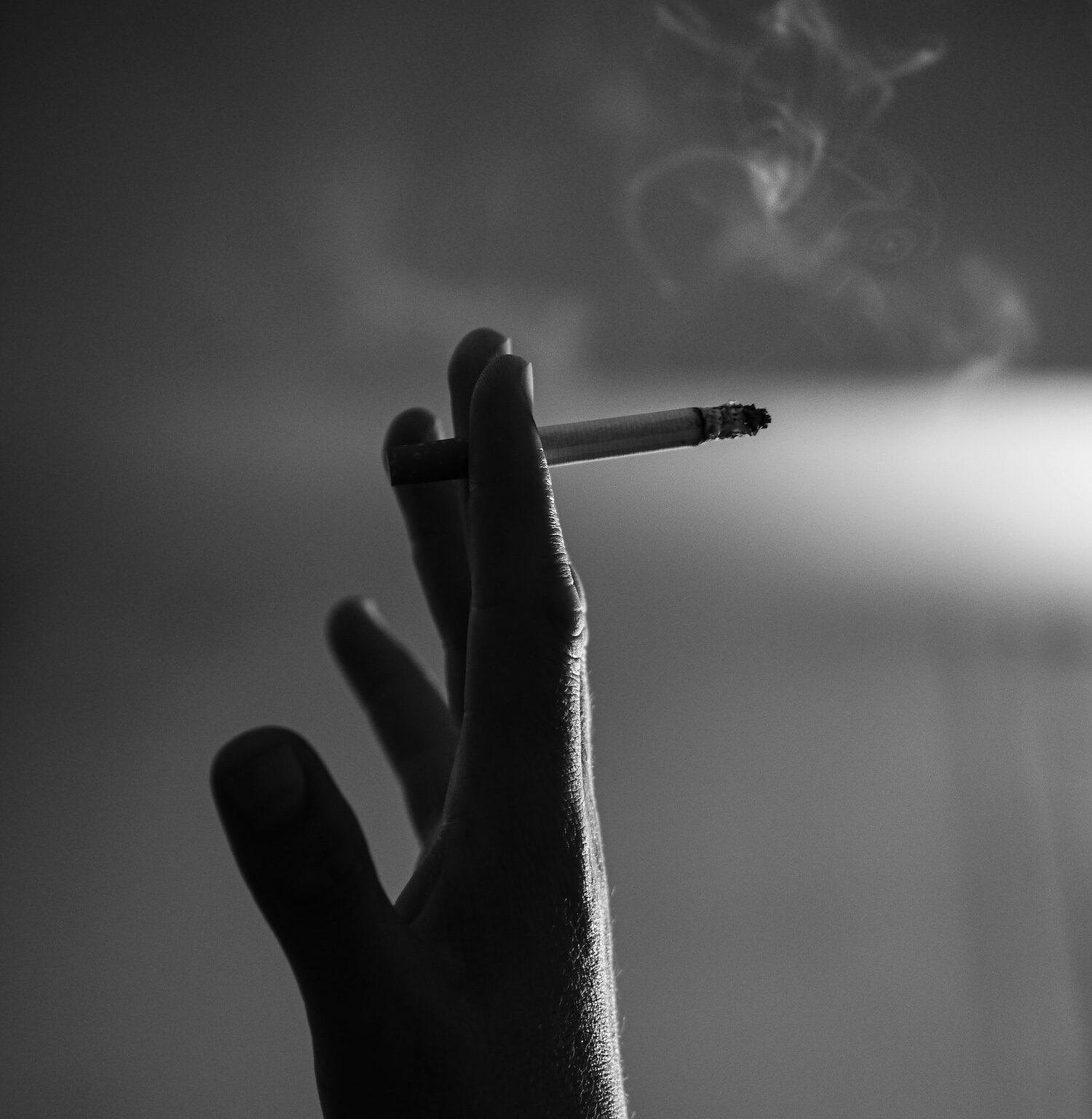
When I come to this spot, I usually lie down and meditate. But not before I have a smoke, of course. After flirting for many years, American Spirits and I have recently formed a codependent relationship. I think after getting out of the codependent relationship I was in a few months ago, I needed something to replace it with, something I could count on. They say you never stop being addicted, you just replace one addiction with another. I think about this as I inhale and exhale the smoke. I don’t feel great about being addicted, but I am addicted, and that tends to outweigh my discontentment.
Often, when I smoke, I think about something I heard from an Indigenous professor at my college. It was from a talk he gave on decolonizing tobacco. It was along the lines of recognizing tobacco as sacred and used traditionally in prayer. He asked if we ever wondered where all that smoke goes. All that intentionless, empty smoke. Now, when I remember to, I pray with each breath and give the smoke an intention. That wasn’t his purpose with the talk, and one time he came into my dreams to scold me about it. When I finish my cigarette, I’ll sometimes take a bit from the end and offer it to the lake. Offering tobacco is a practice of many Indigenous peoples across North America. I hope the lake isn’t insulted by my inadequate, chemical-filled gestures; if I’m lucky, maybe she will even pity me. In Ojibwemowin, the language of the land I’m a settler on, the word to have pity is the same as the word to have unconditional love. Zhawenim.
Photo by Mohcen Cherifi on Unsplash.
Ursula Charles
Ursula Charles writes from the southern shores of Lake Superior, on the homeland of the Ojibwe people, on land ceded in the Treaty of 1854. Their writing is driven by the beautiful and messy stories that are everywhere life is. They see writing as a way to detangle these stories, in an attempt to make sense of the world, before going on to do the work of healing it. A special thanks to Lake Superior for all the stories that Ursula has written, learned, and lived here for the past five years.
Email: ursulacharles07@gmail.com
Instagram: @littlebearursula