It was spring 1983; I was nineteen years old, a sophomore at Cortland State College in NY and I knew I didn’t want to spend that summer at home where I’d be working at a dry cleaners and sharing a bedroom with my two older sisters. So when I spied the Ithaca Times Magazine discarded on a table in the student center with the headline Abbie Hoffman Wants you to Save The River, I picked it up.
The article was about Abbie Hoffman, who, with his partner Johanna Lawrenson, founded Save the River in 1978 to fight the U.S. Army Corps of Engineers’ proposal to allow large ships to navigate the St. Lawrence River in the winter. The St. Lawrence River straddles the border of U.S. and Canada and is the arterial for large ships carrying cargo from the Atlantic Ocean into and out of the Great Lakes. Thousands of islands, big and small, dot the landscape. It’s a boaters’ mecca and vacation place where generations of families have flocked to their summer homes.
When I told my advisor at college I wanted to do the internship he asked me, “Do you know who Abbie Hoffman is? You better look him up.”
I went straight to library.
Abbie Hoffman was a ringleader in a counter-culture movement of the late 1960s called the Youth International Party—referred to as the ‘Yippies’. They were known for orchestrating public events that drew the press and made a mockery of whatever it was they were trying to denounce. In 1968 they organized a bogus convention to run simultaneously with the Democratic Party Presidential convention in Chicago. They nominated their own candidate, a pig named Pegasus. The protesters were met with physical force by the Chicago police and Hoffman, along with seven others were charged with inciting a riot and obstruction of justice among other crimes. Their conviction was overturned.
Years later, the FBI pursued Hoffman for drug charges, so he went undercover and assumed the name Barry Freed. Although his partner Johanna knew his true identity, Hoffman kept it a secret from their friends and colleagues. It wasn’t until 1981, when rumors started spreading and people guessed who he truly was, that he turned himself in and spent a brief time in prison.
Unphased by his notoriety, I filled out an application and became Save the River’s first intern. It was unpaid, and I had no place to live, so I found a part-time job as a cocktail server at the Thousand Islands Club on Wellesley Island. The appeal was that they offered housing on-site for seven dollars a week. ‘Housing’ was an old golf house with no insulation or heat. I had a bedroom with a mattress on the floor. When I got there in mid-May the weather was so cold and rainy I had to sleep in my jeans and sweatshirt. Rumor was that the owners of the club had ‘bit off more than they could chew’. The rooms were run down, guests complained about the lack of water pressure, and the carpeting smelled like mildew. But for all of its lack of amenities, the place had that 1920s charm.
Commuting back and forth to the Save the River office was also a challenge since I lived on an island. I had to rely on friends with cars or my bike. It was a sixteen mile round trip to the office and back. But hey, I could make this work.
The day I entered Save The River’s office I was floored by the disarray. No one had been there in months. Everything was covered in a thick coat of dust. I knew the internship was a summer gig, but there was a stack of unopened mail, uncashed checks, no staff, and no instructions. Then one day a board member showed up to explain their vision: a citizen monitoring program for toxic chemicals.
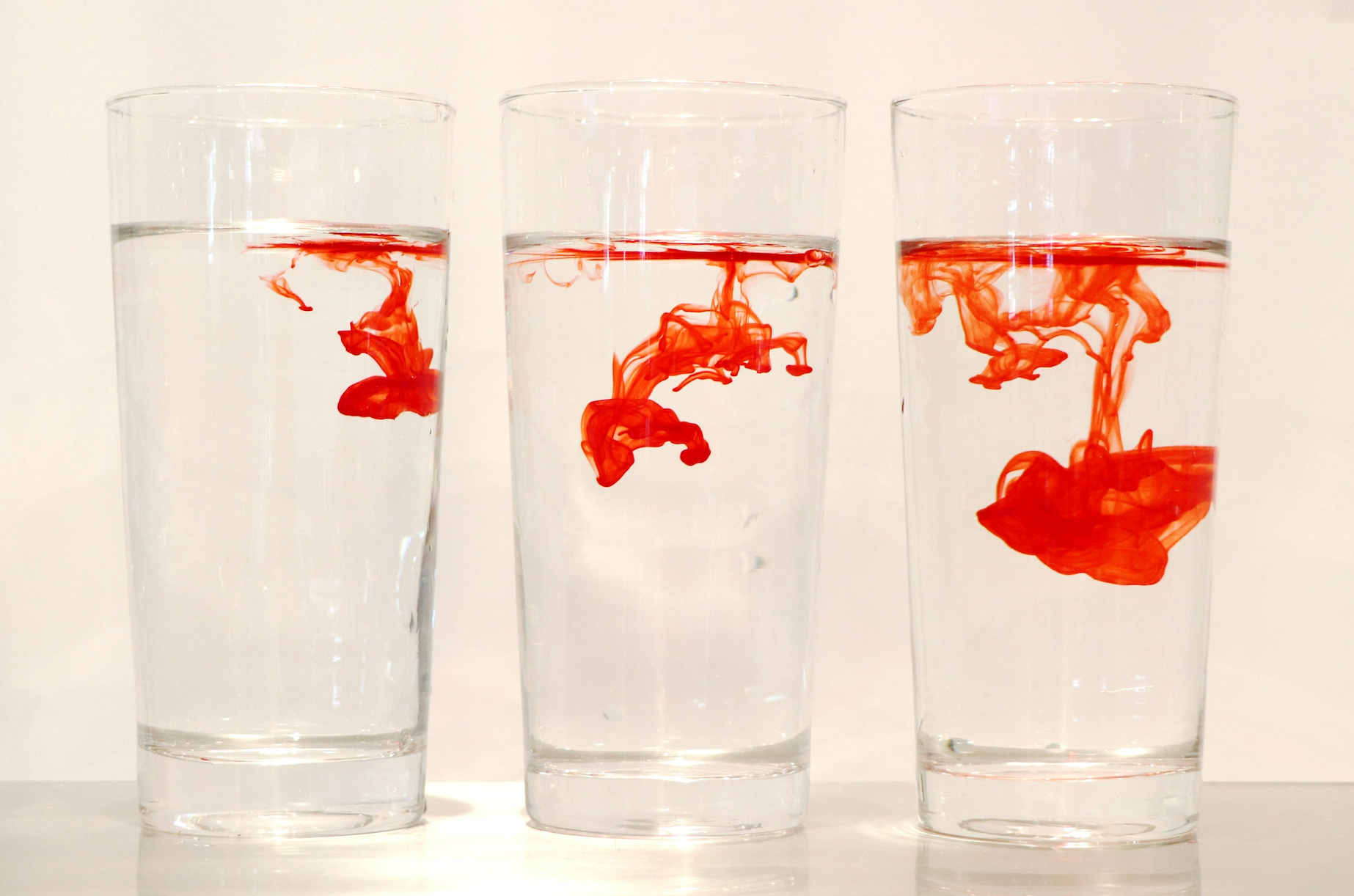
At last, something to do! I called the regional director of the State environment department and spoke to a guy in charge of monitoring. After a lengthy conversation he explained what Save the River proposed was unrealistic: the cost to train and pay for toxicity tests in water samples would be prohibitive. If you want to tackle a pressing issue, he said, ask people to test their sewage systems. Most of the cottages in the Thousand Islands were not on public systems so their waste went directly from their toilets into the river. ‘They are swimming in their own waste’ he said, and the State lacked resources to monitor. He offered to send me a few hundred red dye tablets that people could flush down their toilets and after a half hour, if the dye appeared in the river next to their homes, they knew where it was coming from.
Working as a cocktail waitress meant local gossip. And since Abbie Hoffman lived on the same island where I worked, I heard it all. The hearsay from drunken customers and my stints at the office in Clayton, NY had me convinced: Save the River was a fractured organization. No one knew what to do with the public figure, Abbie Hoffman. Big donors who knew him as Barry Freed, were now trying to disavow any relationship with Hoffman and his environmental group. After all, many were people enriched by the very establishment Abbie Hoffman skewered in his Yippie days.
I finally met Hoffman at the cottage he shared with his partner Johanna. We talked in their kitchen. The conversation was like trying to swim in a whirlpool I couldn’t get out of. He sucked me right in with his angry diatribe. Students my age, he rallied, had no idea what his generation had done for our country! We had no appreciation for their activism! No idea how to organize!
My head was spinning.
At the next board meeting of Save the River I had to explain that the toxic monitoring program they planned on to rejuvenate the membership base wouldn’t work. My speech landed with a thud. When I told them about the other idea the guy at the State had—the sewage monitoring program—they looked confused. It wasn’t sexy.
I didn’t care about sexy; my Dad paid for three credits of tuition for the internship and I needed a project. When the red dye tablets arrived at the office, I got to work. There was a big donor meeting on a remote island, and I brought a box of the tablets with me, packaged in small plastic bags with instructions. A board member drove me to the event in his boat. When we pulled up to the island, I was thrown off by the size of the ‘cottage’. It was a mansion. The owners greeted us at the dock. She was wearing a Lily Pulitzer dress with strappy sandals, he a pink polo, khaki shorts and un-scuffed docksiders. People arrived, and I made small talk over gin and tonics. During a break, I was introduced and explained that I had red dye tablets that they could all flush down their toilets. They stared at me blankly.
My internship wasn’t going so well, but I was determined to succeed. Firstly, I didn’t like thinking Abbie Hoffman was right, that my generation was a bunch of losers who didn’t know how to overthrow a government; secondly, there was the tuition thing; and thirdly, I spent weeks biking back and forth sixteen miles to the Save the River Office, a few times in pouring rain.
I stole a bunch of envelopes from the main desk at the Thousand Islands Resort Club where I worked as a waitress and used a black marker to cover up the return address on the envelopes. Then I stuffed the red tablets into them and rode my bike around the island, knocking on doors, handing out the envelopes to cottage owners.
By late summer I put in more hours waitressing to save money for college. Biking sixteen miles back and forth to the office was becoming a chore. When rumors swirled that the Corps was again proposing winter navigation, Save the River members wanted me to lobby. I was totally disillusioned. And the last thing I wanted to do as an unpaid intern was spend my days off making phone calls on behalf of people who were lounging on their decks sipping cocktails while their shit floated downriver.
A decade passed and I never heard nor saw anyone from Save the River. Abbie Hoffman died in 1989 from suicide. I was working for the Great Lakes Research Consortium, attending a conference on the Great Lakes when the new (paid) Executive Director of Save the River got up to speak about public participation.
“The Riverkeeper is a successful citizen monitoring program,” she said. “Homeowners are given red dye tablets and asked to remediate any problems. Those that do are given a small wooden statue of a Great Blue Heron (small enough to sit on a mantle). To date, we have given out over 1500.”
After her speech I went up and introduced myself explaining I had been the one who started the red dye tablet outreach program and explained how. She laughed, as if it couldn’t be possible. But I knew. After a summer of crushing self-doubt I had accomplished something big.
Sheila Myers
Following her tenure with Save the River, Sheila Myers completed an internship in Washington, D.C. with the International Joint Commission (IJC), a binational organization addressing boundary waters issues between Canada and the United States. Over the past three decades, she has worked with organizations dedicated to the advocacy and education of environmental stewardship, particularly concerning the Great Lakes and Finger Lakes watersheds. Myers is a professor at Cayuga Community College in Auburn, New York where she teaches aquatic science and ecology. In addition to her academic work, she is an award-winning author of five novels, which explore the interplay between natural environments and human culture. Her essays and short fiction have been featured in Adirondack Life Magazine, Appalachia Journal, and The Stone Canoe Literary Magazine. If someone were to ask what professional accomplishment she’s most proud of she’d tell them, “planting trees with my students.”
You can find more about her work by visiting her website https://www.sheilamyers.com/ and follow her on Instagram and Facebook @sheilamyersauthor