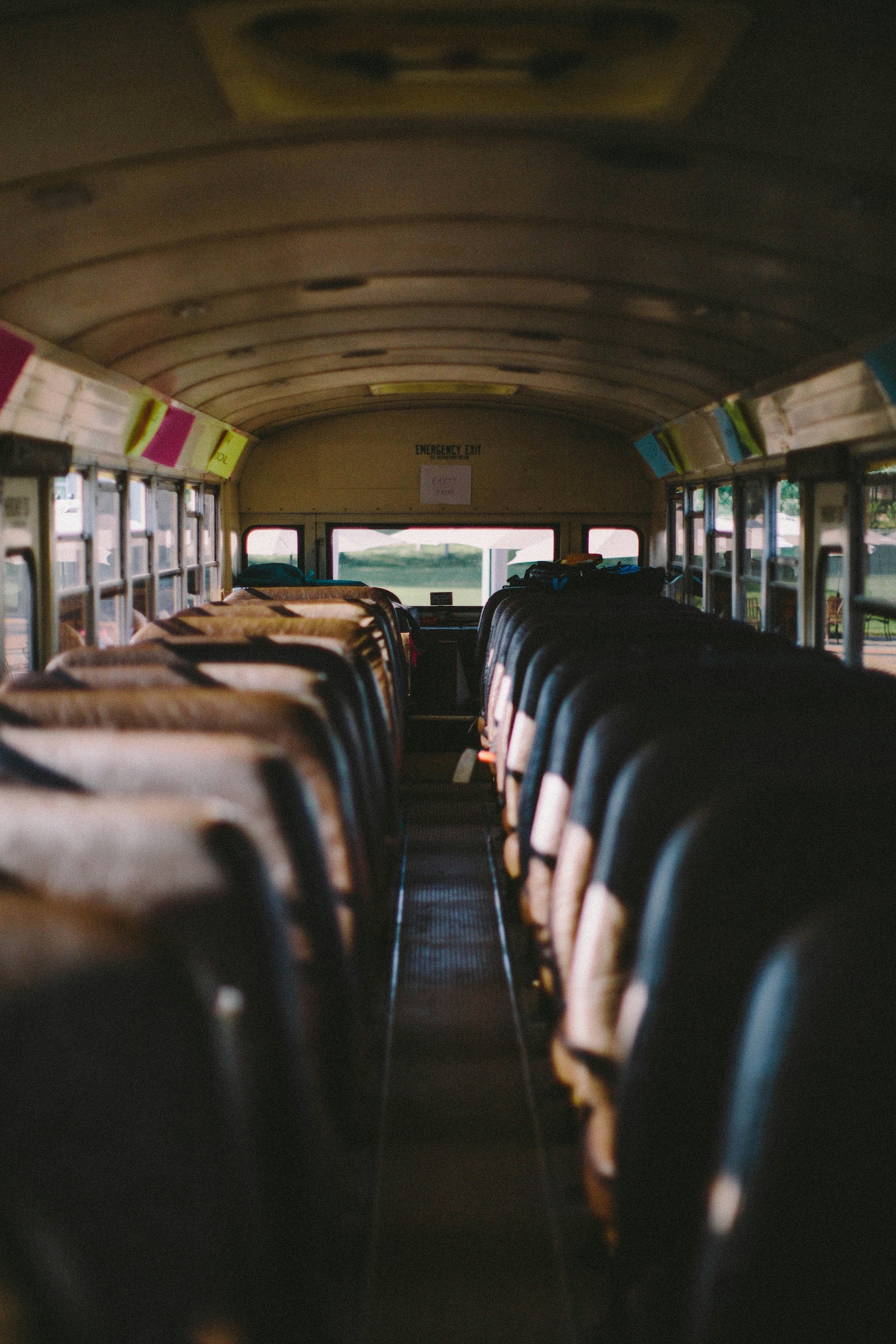
We lived in the boonies, surrounded by trees.
Our nearest neighbor lived down the road. The next was a ways after, set back on a dirt driveway.
Kids were scattered here and there but only one my age. Al Swackhammer. He spent his time grubbing in the creek for crayfish. His family owned a ratty farmhouse passed down through generations of Swackhammers.
I didn’t hang out with Al.
School starting was a relief because people.
Dad taught earth science at the high school, where I was a freshman.
I could have driven in with him, but I took the bus, which stopped for ten miles of driveways.
A kid named Eric had a boom box. He played side A of Back in Black and then side B of Back in Black, then side A of Back in Black and then side B of Back in Black.
Another kid named Lyle talked about Magnum P.I.
Diane Larrabee sat up front and popped her gum.
The halls of the high school were jammed. They went on and on.
I was small. The only place people noticed me was the bathroom, where the same boys collected and stared at everyone.
I should have known the kids filling my classes. We’d gone to the same junior high. I didn’t.
Alphabetized seating put me next to a kid named Charles, who whispered filthy comments about the teachers. Mr. Hauck looked like he fucked sheep. Mrs. Klein must have gotten it good last night. Mr. Pitney’s balls hadn’t dropped.
He talked about our classmates, too, about orifices and body hair, which he described in all lengths and colors and odors.
I didn’t react. Charles kept talking.
At the first pep rally, I ended up low on the bleachers.
“Gimme a G!” shouted the cheerleaders.
“NO!” the kid next to me shouted.
“Gimme an O!” they tried.
“NO!” he said.
“Gimme an L!” the cheerleaders screamed.
“Gimme a blow job!” he countered, and a teacher turned our way, mouth set.
Dad had a hard time remembering names.
He gave the same lectures year after year.
The same worksheets.
There was a lot of “study time,” so Dad could grade.
Other teachers coached or led clubs, for love or money. Dad was out the door at the last bell.
My classmates should have put it together, that he was my dad. The name. But no one did. No one cared.
“Wait till your teachers say they wouldn’t have guessed,” my brother Mark said. He was home from college.
“The what?” I asked.
“Yeah,” he said. “You’re so different from your dad. It’s supposed to be a compliment.” He ran a hand through his hair, which had inched toward his shoulders. “Yo,” he said, digging in his pocket. He pulled out a small, gold ball on a post, which he punched through his earlobe, “check this out.”
“No way,” I said.
“Yeah,” he said, “though just the left ear. Not the right,” he said.
“Mom and Dad know?” I asked.
“Not yet,” he said, grinning.
My teachers didn’t mention Dad. What they hoped was I’d be a good student, like my brother. My brother was a joy to have in class. I had big shoes to fill.
They looked for Mark’s face in me, but it always stayed mine, and no one wanted to see that. My jaw sank into my neck. My eyes were dirt brown. Zits sprouted into my hair. I never smiled. I just watched, waiting.
I signed up for Yearbook, which met after school, and I took the late bus, which got home right before dinner. I signed up for the school paper, same schedule. I tried cross-country for a while, even though I hadn’t run anywhere ever, because it met after school, and Mr. Henrie, the coach, dropped us home after practice, right before dinner.
On weekends, I begged Mom for rides to the library or the arcade or to a friend’s house. When she couldn’t, I begged friends, meaning their parents.
When that didn’t work, Dad had projects. It’s why we lived in the country. Dad liked collecting rocks for walls that wouldn’t get built. We stacked wood for fires that would. Weeds needed to be whacked. Holes needed to be dug. He got excited about digging holes. That was in summer and fall. Winter was a nightmare of shoveling.
In the cafeteria, I spent my time with Jim and Tim and Tad, who spent their time with each other.
Jim and Tim and Tad. People liked saying it. No one ever added my name after Jim and Tim and Tad.
Jim wore button-down shirts over colored t-shirts. He brought lunch in paper bags he folded when empty, and he re-used them till they turned ragged. At fourteen, he knew he would be an engineer, like his father, and we knew he would stay thin his entire life and wear wire rimmed glasses and have one drink.
Tim spent weekends with his dad, who spent weekends on dates. Tim said his dad dated women who liked ice in their wine, which was meant as an insult. Jim and Tad and I went to his house when we could and played Atari and watched Caddyshack. That stopped when Mom found out we were always alone there. I never saw Tim’s mom’s house.
Tad wore long, blonde hair. His mom liked to brush it with her fingers. She was re-married to a man who registered our existence but spoke only to Tad, who hadn’t emptied the dishwasher, who hadn’t cleaned up after the dog, who hadn’t folded his clothes. Discipline was important, the man said. He taught Washin-Ryu karate at the local dojo. We waited until he left to make goofy hi-yah noises that sent Tad into tremors.
In Social Studies, a kid named Scott stared at the teacher when called on, like he didn’t hear and didn’t hear. Eventually, he’d say, “Oh, me?”
He scratched the top of his head, monkey style, for minutes on end, until the teacher had no choice but to comment. “It’s pityriasis capitis,” the boy said. “I can’t help it.”
He asked questions that were inaudible except for the repeated use of the words “social” and “studies.”
He made sure his worksheets were crumpled.
Every chance, he stole the staples from the teacher’s stapler.
He loosened the screws in his chair so that it squeaked nonstop, and, when the custodians fixed it, he loosened them again.
The teacher liked to say “etcetera,” so Scott said it, too, a lot.
In Algebra, a kid named Eric asked if I was wearing Garanimals.
He said that a kid one row over and a couple seats up should be known as Rabbitman. Because of the nose, he said.
To the kid who wouldn’t stop talking about Fenway Park, he asked, “Fenway Park? Really? Did you go down on the field? Did you munch that carpet? Did you use your tongue?” When someone explained what that meant, the kid stopped talking.
He told one kid he needed a bigger bowl for his haircuts.
He told another he was a doofus.
Another kid had a fivehead. Snaggleteeth.
Eric said only hicks and speds wore Wranglers.
He asked if midgetism ran in my family.
He called me Zoner. He liked that Zoner rhymed with boner. Stoner. Moaner. After a while he switched to Space Cadet. Zombie boy.
He asked what was my problem? He hung his mouth open and said I was going to catch flies. “Duhhhhh,” he said.
I didn’t respond, and, after a while, he stopped.
I went to a football game with Bert, who had Deutschland patches on his coat. Bert said people went to hang, not watch football, so we spent three hours walking. We walked to where they sold popcorn and hot dogs. We wandered under the bleachers. Circled the field. Bert nodded to people who nodded back.
I went to a basketball game, assigned to take yearbook photos, and sat high in the bleachers and felt sick from the heat and the high-pitched squeaking.
I went to the school play and winced for the kids onstage.
One weekend, I went to the comic book store and thumbed through bins. In the back, boys and more boys played games around tables.
I watched WKRP reruns on the black and white in my bedroom.
I sat on my bed and listened to Casey Kasem.
I read piles of books from the library, and, when they were done, I reread the books we owned, which were for kids half my age. The Hardy Boys. Charlotte’s Web.
When I couldn’t stand the house, I stood out front and hit driveway gravel with a pockmarked wooden bat.
Some evenings, Mom organized photos. She asked if I wanted to help. I didn’t, but I sat down with her and said I didn’t remember our trip out west, though there I was, in the back seat of the car, sweating. There I was on a stone fence in front of Mt. Rushmore. There I was with Mark, on the lap of a Native American man in full dress. I didn’t ask about the shots from an amusement park that didn’t look like Disney. Moosic Park, Mom said, and I shrugged. There were pictures of our old house, brick and ivy with a metal playset out back. I remembered that the slide got hot, and I remembered the latticed climbing dome, the swing set Mark jumped from and broke his arm, and there were pictures of Mark with his arm in a cast. There were pictures of me, my face broken after I fell from a bike. I wondered why those got taken. Who wants to remember that?
By fifth period Algebra, the teacher, Mr. Schultz, had sweat stains running from his armpits to his belt. He looked anxious and exhausted as he drew equation after equation on the chalkboard that never properly erased. The chairs in that room were extra loud, and I was careful not to move and send out a creak or groan. A kid by the windows leaned his head back every day, pen cap in mouth, and fell asleep. One day, I heard Mr. Schultz say to no one that he hoped the kid would choke on it. It seemed a little excessive, but I knew teaching was hard.
Close to Thanksgiving, Mr. Utech, the wrestling coach, stopped me in the hall. He used one hand to grab my shoulder, and it felt like I’d never move again.
“Where’ve you been hiding,” he said, looking me over.
“I,” I said.
“What are you?” he asked, “110?”
“I don’t,” I said.
“Season’s already going,” he said, “but we could use you.”
“I’m not,” I said.
“Come by the gym after school, and we’ll get you started,” he said and spun me loose. I didn’t. I couldn’t. I had other obligations, and I hurried through the halls between classes.
Mid-morning, kids going to voc-ed headed to the main exit, in a wave. The juniors and seniors who had lockers down the hall from me—the kids who were going to good colleges—they hummed the march of the proletariat. I didn’t know the tune, but Mark explained over Thanksgiving break.
Between Thanksgiving and Christmas, teachers had to stop a half-dozen fights. People talked about when Rick Rodman beat a special ed student into the hospital. From what I heard, the special ed kid had said he wasn’t afraid of Rick Rodman. He should have been. We all were. Rick Rodman wasn’t going to finish high school. He was going to find a job in construction or fixing cars or killing people, Tim said. I said I didn’t think that was a job, exactly, but I didn’t disagree. Rick Rodman was only medium height, but he had the build and muscles of a pit bull and the same set to his face. No one knew him well enough to know his story. After he beat the special ed kid, the principal got on the PA and talked about how this wasn’t who we are. I hadn’t ever considered the principal and me as “we,” but I was okay with the speech.
I agreed with Kirk, in homeroom, that, yeah, Christmas break was going to be cool. It was going to be excellent to have some time to hang, to chill. I said I was also going to stay up late and sleep in, though I knew I would wake every day, like I always did, as soon as I heard the floor creak under Mom’s or Dad’s feet. Mark and I would fight for turns playing video pinball on the boxy PC Dad had brought home. Dad would strong arm us into games of Monopoly. I would fall asleep early, watching movies.
Mom would make a turkey and stuffing and mashed potatoes and apple cranberry pie, and Mark and I would clean up after.
It snowed over break, so Mark drove Jim and Tim and Tad and me to the sledding hill with our cracked plastic sleds. Mark gave my saucer one ride and then settled behind the wheel of the car.
Jim and Tim and Tad and I went up and down and down again. We were older than the other kids, who came with parents and grandparents.
At home, Mark and I shoveled the pond and skated over bumpy ice. After a while, we broke out the hockey sticks and shot pucks between twigs we’d stuck straight up.
Mom made us hot chocolate and then made more when Mark asked.
We burned a fire in the fireplace all day long.
Mark’s friends came over with six packs of Molson. They hung a dart board in the TV room and then a board behind it when their shots pocked the plaster wall.
“Come on,” Dad said to me, the weekend before Christmas. “Come on,” he said, knocking on Mark’s bedroom door, and he got a handsaw from the garage, like always.
We followed him up the trail behind our house, past our property line and onto state land.
“Look for one about eight feet,” he said, even though he chose the fir we cut. We took turns dragging it home.
Upstairs, under the vaulted ceiling and too close to the fireplace, Mark and I held the tree while Dad tightened it into the dinged red base. It still tilted. Mom appeared with a camera and then disappeared again, and Dad tied the tree to window handles with fishing line. It was the only string we could find.
Eventually, Mark said, “Good enough,” and he and I watched Dad in his dirty sweatshirt fussing to get the tree steady. Dad had gained weight over the last couple years. He grunted and held his knees when he crouched and stood. When he turned to us and grinned, I couldn’t help it. I grinned back.
I’d asked for the Mattel football game, but I got a cheap, electronic basketball game with keys that stuck. I got a digital watch with a tinny alarm. I got a sweater that I wouldn’t wear and a couple tapes, a bathrobe. A book of Garfield comics. Dad was proud of the solar calculator he’d found me. Mark kept his gift for me last. It was a t-shirt that showed a man standing at the edge of a skyscraper, leaning into the wind. He was holding a radio and had a desperate look on his face. Above him, it said Go Ahead. Below him, it said You Just Heard Van Halen Again.
“It’s a joke,” Mark said to Mom, who frowned. “They play it, like, a thousand times a day.”
The weekend before school started again, I sank into the sofa, watching TV, trying to think about anything but going back for five, six more months.
After a while, Mom sat, too, and asked if I was enjoying my classes. She asked if I liked some subjects more than others. If I knew what I wanted to take next year. If I should start studying for the PSAT. If it was too early to think about colleges. “Mom,” I said. She said it wasn’t too late for the charter school, which we’d considered, so Dad could have his place and I could have mine. She said it was important to make good choices. It was hard, she said, but important. “Mom,” I said.
I said it was fine. Classes were fine. The teachers were fine. Maybe I’d try swim team or mathletes. I’d go to a dance, to see. I said the new computer lab seemed cool.
About college, I only had Mark’s stories about dining hall food and parties, the professors that were good. What else did a ninth grader need to know?
“Mom,” I said, “it’s fine.”
And I got on the bus. Diane snapped her gum, and Lyle talked about Magnum P.I., and Eric played Back in Black.
In the wet heat of those bodies squashed in seats, it was easy to drift. I thought about the day ahead.
Homeroom and the bell. Social Studies. English. Gym. Lunch. Algebra. Earth Science. French. Something or other after school.
I thought about how it would be the same thing next year, different order, and the year after that.
Jim and Tim and Tad would fade away and be replaced by kids who would fade away, but I somehow knew Charles would sit by me always, obsessing about orifices.
Dad would be down the hall, thinking about his retirement fund.
Someday, I’d get my driver’s license. That would be something.
For now, I was on this bus, tracing in the steamed window. A line over two hands, the swoop of a nose, half a head with two watching eyes. Kilroy was here. Me, too.
Photo by Jed Villejo on Unsplash.
Matthew Roberson
Matthew Roberson is the author of four novels—1998.6,Impotent, List,and the recently published campus novelInterim. He also edited the collectionMusing the Mosaic: Approaches to Ronald Sukenick. His short fiction has appeared inFourteen Hills,Fiction International,Clackamas Literary Review,Western Humanities Review,Notre Dame Review,McSweeney’s Internet Tendency, and others. He lives and teaches in central Michigan, where he also directs the CMICH Press Summit Series.