Leo is a good player, skilled in translating raindrops that boil on the Detroit River while fishing into metaphors, a man who accepts his setbacks and those of his friends with reverence and respect.
He’s indifferent about hustling into corners after a puck with his head down. For him, there are worse things in life than losing one’s balance during a shift on the ice. He’s taken a bullet. Two 5.56 NATO rounds to be precise, just outside of Helmand Province, one to his lower right hip, another to the left bicep. Under the locker room’s fluorescent lights, each hole has healed into a smear of mottled skin that looks like creamy pudding.
On Thursday after the skate, he comes by my shitty apartment for his weekly bourbon and to profess mistakes he’s afraid to admit to his wife and regulars in the locker room. Once the right amount of alcohol hits him, he slumps into the stained La-Z-Boy and whispers about the brittle heat of Lashkargah and Sangin, the way his dead soldiers stagger out of his memory without warning.
Waiting for sandwich and poof, one of them pops into my head for no good reason, he chuckles, twirling ice cubes in his Styrofoam cup with an index finger, sixteen years removed from the last deployment.
Bearson. Galvin. Wilbert, quiet, good-hearted kid from North Carolina, tough as shit. No rhyme or reason. Can’t explain it. They just show up.
He shakes his head, takes a long sip and mutters, Their faces, Billy. That’s what I remember. Black and white kids. Hispanics. Some of them Middle Eastern. See them before patrol or stumbling through sand blowing around camp, rubbing the grit from their eyes. Just staring past the gate. No expressions. Nothing.
I nod, sip my bourbon and conclude that no earthly language or compound can mend a man’s busted heart. His regret equals dislocation, a state of existence inexplicable to the unscathed. Never mind civilians, pastors and spouses, religious and agnostic, the politicians deaf to human discord vibrating around the world.
I take another sip. Smile, peer at the cracked wet plaster of the ceiling and ask God for forgiveness once more—for Leo and his dead soldiers, the Thursday night regulars and the guys who sub, for the innocent killed in Ukraine, Israel and Gaza and the ones buried by mountain floods and earthquakes on the other side of the country, for people left concussed by mass shootings, for my kids puzzled by my new apartment 27 miles from home.
Dislocation, a condition in which a joint is knocked out of the socket due to trauma or weakened muscles. Once forced back into place, movement is permanently restricted, thereby decreasing range of motion for a knee, elbow, hip, or ankle.
Dislocation: four syllables, the enunciation of which forces me to say it in a measured pace. I sip my drink, whisper it slowly three times. Dislocation. Dislocation. Dis-lo-ca-tion. Understand that it will never fit comfortably into a sentence no matter the context in which it’s used.
Good gravy, Billy, Leo suddenly declares. He delicately sets his cup on the side table. I’m doing all the talking and don’t even ask what’s happening with you. Any movement on the job front? You and Em talked lately?
I shrug. Peer at a splotch of gravy on the Formica counter. Pick it with a chewed thumbnail, until the crusted blot loosens, then swipe it into the sink. Run a hand across the surface, feel for nubs of fossilized food that should be scrubbed with a sponge, a practice Emily perfected over two decades, three kids, a pandemic, six layoffs and this recent separation.
I bow my head. Turn toward the apartment door. Conceal my lower lip that quivers. Try not to think about my little girl sitting close on the couch while coloring in her Adventures of TinTin coloring book, the boys stretched out on the family room floor watching ESPN clips of a Lions’ win, Emily humming Cowboy Junkies’ “Sweet Jane” while making dinner.
Space. That’s what’s needed. Chunks of time to decode the immovable force that bloomed beneath floorboards and enveloped the house with a confusion as dense as mud.
Not lately, I croak, embarrassed by the emotion in my words. Asked if I cut back on drinking or found anything more permanent.
I place palms on the counter. Gaze through the apartment. Study our blurred reflections trapped in cloudy windows, our bodies undefined and fuzzy from mistakes we’re trying to fix.
I look up at Leo and offer a weak smile.
Got an interview next week at Ford, I whisper. Hoping and praying it pans out.
I wipe my eyes with my wrist. Bring the cup to the mouth. Drink until his remorseful smile disappears.
That’s good, Bill, real good, he sighs. I’m really glad to hear it, big guy. An interview is all you need. You deserve some good news. Ya never know, sometimes even stupid fucks like us get lucky.
We look out the window.
Nod at the conflicted variations of shadows outside.
Recognize that we’re just two men who pray for their friends. One who doesn’t know how to stop the flood of bad mistakes. Another who has memorized the names of his soldiers’ hometowns but won’t permit himself to say aloud. Oakland, Mobile, Royal Oak and Oxford, Michigan, just down the road, and Little Elm, Texas, halfway across the country.
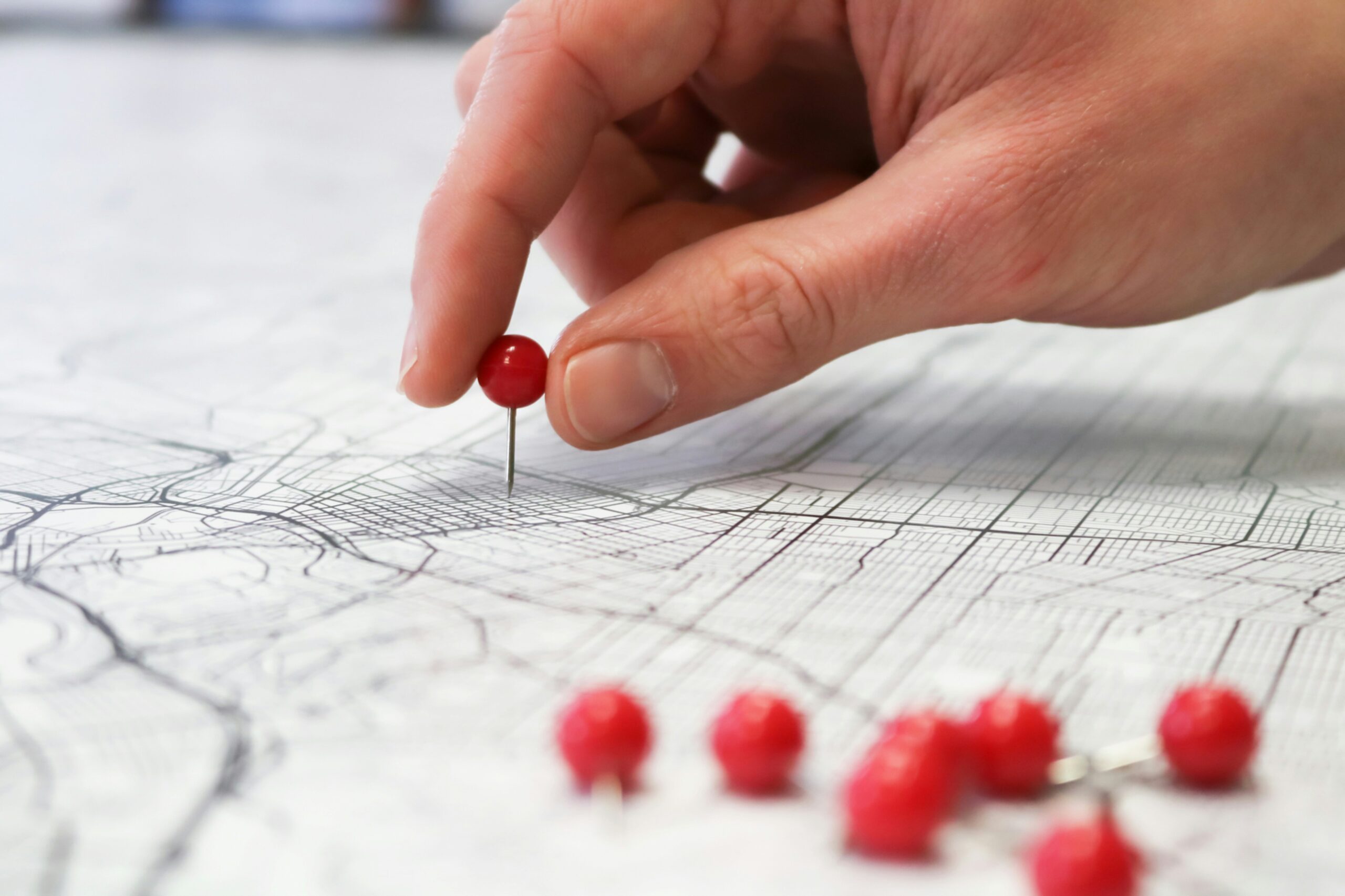
Spots on a map where the wounded get lost in the shade of objects both handmade and natural.
Gary James Erwin
Gary James Erwin lives with his family and critters in Clarkston, Michigan. His work has appeared in many literary journals and magazines, earned a couple of Pushcart Prize nominations and inclusion in a few anthologies. His first collection of stories, Trail Crossing Sixteen Counties, was published in 2019. He is currently working on a new collection titled The Injury List, of which “Dislocation” is a part. Other stories from this collection are forthcoming in Bull and The Louisville Review later in 2026. He is also working on a novel titled Cut River Redemption. Excerpts from his novel have appeared in Adelaide Literary Magazine, Pebble Lake Review and Trace Fossils Review. He is the associate vice president of Marketing & Communications for University of Detroit Mercy and spends a good deal of time in the country’s oldest city, St. Augustine, Florida.