The turning of things into another type of themselves; the moment of transition, which is endless and always coming, never done; the churning, changing, momentous repositioning of a person from one thing to another; child to woman to back again. Searching and uncertain in the sun.
In the mornings we walk the beach. The sand is populated by bright stretches of bleached shells; and their fragments; the fragments of those. Ridged and scalloped and salt worn. They lay on the dark sand in their fervent beauty, like a path of the sun. The detritus of a living entity so vast it cannot be known, the type that eats up anything with a single gulp. When they touch a gentle set of soles, they are sharp with the need for hurting. That must be the way of things.
At this early hour the sand is populated only with us northerners. My mother matches my steps quietly beside me, bare toes treading careful and slow. The beach is a locus of the fruit-seekers; those in need of succor and the not-always-kindness of the sun. We feel a calling to the endless depths churning at the end of the sand. Throw every wish, every wrinkle, every damage into her embrace. All of us here come searching for one thing or another.
The sun over the gulf is not yet yellow but pale and glowing. Reminiscent of the small lies that fall out of mouths when we least expect them. I am here to feel this sun sink into me again. That is the reason I have given my mother for coming. Yet there are still deeper truths. I wanted to see how she lives; to see if things feel different. If there is something still ugly under the surface of things. I wanted to know if I could come here as a woman, divested of my clinging girlhood.
Florida was once our escape. Those Michigan childhood winters were long; all the snow was a cover that the fields could not lift, and the ice traced upward from the asphalt of the driveway into our veins. Our skins were pale with the neglect of the sun and the abuse of the wind and the accumulation of wounds that my father knew how to open beneath the skin; with his shouts and seething silences. Then we headed south, so often as we could, and left him alone to his drinking far up in the snowy north.
Florida was a haven. She was a feeling; heavy and warm and safe.
On the small dunes sit bright-beaked and low-necked birds; the ones who face themselves worshipfully to the sun. The difference between a sand piper and a seagull is lost in the vagaries between the shades of wings, between tiny hatch marks in the sand.
I have the sense that I cannot see the difference in things anymore. In the way that the flickish skitter of a lizard against the barren plain of the sidewalk is no different from the hushing rush of seabirds when they take to wheeling in the sky. In the way that I was a child here, seeking shelter far from the north. Now as a woman, that child still sitting at the core of me, with the remembered need for fleeing aching in her bones.
Salt in wounds. A sunny place is no savior from the death grip of reality. In the end we are all only souls thinly sheathed, and the penetration of the sun is never so deep as we wish to believe.
I was the first to leave. Put the distance of an entire ocean between myself and the known; left for good. I do not return here with ease. Florida knew me as a child, but now I am a woman. Reborn. It was my choice to cast myself away and push off from the places where I had been known; to go in search of one where nothing had to be the same. The sense that I do not fit neatly anywhere sits blatant on my skin, howling on my soul.
My mother left him a few years ago, my father up north. She bought the condominium shortly thereafter and returned to the place we had always had for disappearing from him. Our old life and its bitter realities. After the divorce she was left with no choice but to become a woman she never knew she could be. The hometown in the north became a place that neither of us could wholly belong to anymore. Not after uncovering the lies of our old lives, our old roles, our old selves, after finally saying aloud that it wasn’t alright in the north, that maybe it never had been, that though our bodies had inhabited that place, we had never not been longing for another reality in which to be, far from him. Free.
She is someone new. Someone I have never known. I see it in the loosening in her shoulders, the way of her walk on the damp beach. How her eyes search the horizon and then land again on the contours of my face; eager but trying to contain it. My escape has made me a stranger as well; leaves us with no choice but to be reacquainted. I think perhaps that is why I have come. Our eyes search the water together. Hold onto the smudged horizon. The place where sea meets sky and becomes one.
Florida is its own distinct reality; a mist-veiled mass that rises unexpectedly, impossibly from the sea. Even in this place the truth of things catches up with you eventually. We came here looking for the possibility of forgetting. For the endless, ceaseless haunting of the surf on the beach, that watery echo that lingers in your ears forever once you’ve heard it. Now my mother has come to stay. To have herself washed by the endless pounding of the waves until the layered, intricate, decades-long abuse is eaten away and gone. Swept out to the depths.
Between the sea and the soul there is not a great gap of anything, only a sliver that is like moonlight, salt on the lips, or the edges of the surf and their frothed white tendrils. There is only a continuation of two living things. One the great blue mystery of the world; the other a fleshy infinity, kin to a black hole and a sea bottom. Sculpted of mud by the gods.
This place is still under my skin. Florida has long held a piece of me. I never wanted her as my own, just a place for escaping to. A place for the girl that I no longer am, but who still inhabits me.
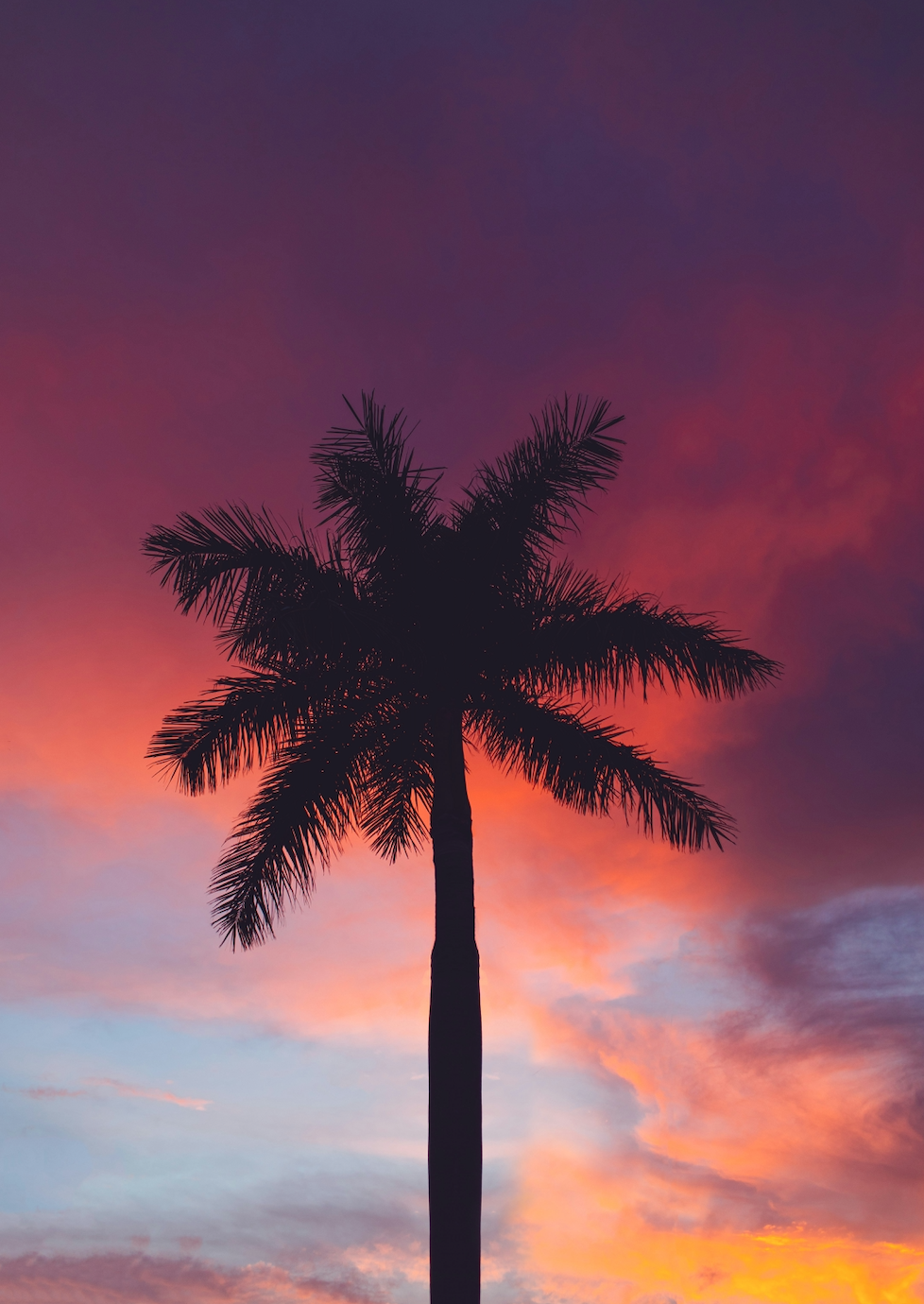
They ask me here why I have left this land. My tongue ponders answers as my eyes settle on the bamboo rotaries of ceiling fans, on the pinkish expanse of sunrise sky, on the spikey silhouettes of palm trees. My mouth is slow and unsure. Truths flash like silver minnows on my tongue. Years of steady hurts. The need for disappearing a constancy within me. There are those of us who leave homes because of fathers; but to admit so often seems to leave the indelible mark of a naughty child, making it into a game, a mere play at running away. I left to unfurl myself into a woman.
Things change, but not unexpectedly. Only in the death-knell beckoning call of the inevitable. The gulf will never cease her consuming of the land; every endless rushing of the surf as she rolls in, never failing to take something in her wake. Those we have left behind will never stop being incrementally lost, until all we have left are holes on the beach that keep filling with water. The lingering imprint of their presence on all the broken places within us.
When we reach the remains of the jetty there is a havoc of uprooted palms from where the hurricane blew through. Mounded bastions of sand and sea detritus where its concrete spine used to be. The sandy path that wound through the trees is lost and the trees themselves lay in disarray, roots and trunks and fronds overturned, scrabbling at the sky in bereavement. Somewhere there is an old photograph of myself on the jetty as a child, with my windblown hair strewn across my face so that only the small teeth of my smile can be seen.
The gulf murmurs on; the gulls and pelicans and terns wheel overhead with their bird eyes in their bird heads. I think they must have forgotten already that there used to be anything here at all but this wreckage. Their only mental compass is the insatiable search for the gleaming backs of fish peeking out beneath the waves. The toss of breadcrumbs and chips on the sand. The burrowing of soft-shelled and tiny crabs near the shore. Things change; and they don’t. The gulf is still the gulf. Salt and sand comingle and come on in a song that startles the soul with its mercurial and devastating beauty.
Brokenness is only entanglement. To be chipped or slightly ragged is a natural response to the condition of belonging as a being within a constellation of souls; the endless miasma of life which cannot be extricated from without some necessary loss. Then there you are: partially unwhole. But free. Breathing; shallow and slow.
Part of me will always wish to shout. Throw myself prone on the sand or walk into the gulf with my clothes still on my back; go down beneath the waves and not rise again until the sky is a different pattern of existence. Not until I am weighed down by the saltwater infinity and torn on jagged outcroppings that snatch away bits of my flesh. Until the waves know my face; and I am gone like no one has ever known me to be alive.
My mother tells me that she prays for him still. I have no knowledge of their efficacy, yet I speak those prayers too. Let them fall from my lips until they are infinite. Found deep in the harsh gullets of the gulls as they bob and sink and lift on the wind; in the palms and their dry susurrus; in the waves that beat like a heart.
Somewhere within the rise and fall of the surf I hear it; the breath of a beast that has plagued me since I was too young to name it. Hush. Roil. Fall. Crash. Stutter. It is everywhere I go.
Lizards are scuttling and fleeing in my head. So lithe and smooth, their tails disposable. If you pinch them there in their skinniest bit and ignore the fatter body – the pointed little head and the gulping mouth with the bright black eyes depthless and alive – you’ll come away with nothing but tail. To escape a heavy hand, you often must leave something behind. A sacrifice for the hope of something better.
To remove yourself from the rest is a startle of freedom at the onset. Stretched out and unhindered; freedom is alone and untold, without the parameters of former captivity. Freedom is naked. A bareness, and the most rotten and lovely landscapes of the soul, all strewn upon a canvas in need of some inhabitance.
My mother and I can choose now where we belong, though it does nothing to diminish the knowledge of our own liminality. Cast off a life and go onto a new dwelling place, a new state, a new continent. But we will be strangers in some way so long as we still remember another home. The terrible wishing within us that we could still belong there.
We return to the beach for sunset. I wish that we didn’t have to ask what it could be that drives a woman so far from her home, because the answer may not be easy to swallow but bracing and ugly. On the cool sand we stand, and I ponder the awkward grace of the pelicans plunging into the sea, big mouths open and wanting. So hungry. I, too, am still so very hungry; but I am not the trapped girl that I once was.
Suddenly I am breathless. On the cusp of overflowing and spilling and then receding all over again in a cycle of endless renewal. The surface of the gulf is populated by a million mirrors. Each wave a shattering of the sky and the last bright kiss of the sun. A part of myself is refracted and lost, reflected and then sunk again in the deep. Softly, interminably, swiftly fading. Slipping again farther and farther from this place.
Emily Learman
Emily Learman is an American expat living in Berlin. Born and raised just outside ofAnn Arbor, she holds a BA from the University of Michigan. She is currently pursuing a master’s degree in European Literature.