Neither of us wanted to go back to Ontonagon. We’d been there for lunch and dinner the day before, because it was the only place for miles around to find a decent meal. The food had been good both times, but maybe we’d be pushing our luck to expect the same from a late breakfast. On the other hand, we were both tired, for different reasons: Ken had woken early to hike the Porcupine Mountains State Park trails, downloading data from his meteorological network, scrambling over fallen trees and sliding around deep gullies. He returned sweaty and aching, just making it back in time to check out of our room. I slept poorly, unused to hotels after a year and a half of not traveling because of the pandemic. We were wiped out and I had pretty much written the day off as a total loss, although it wasn’t even noon.
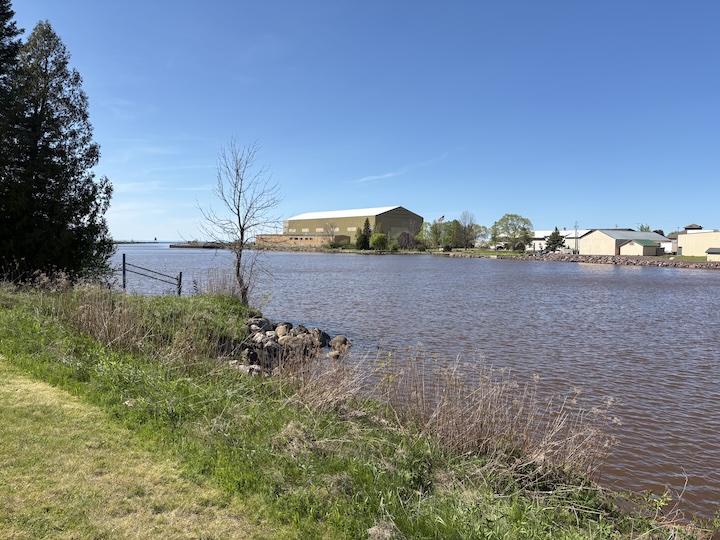
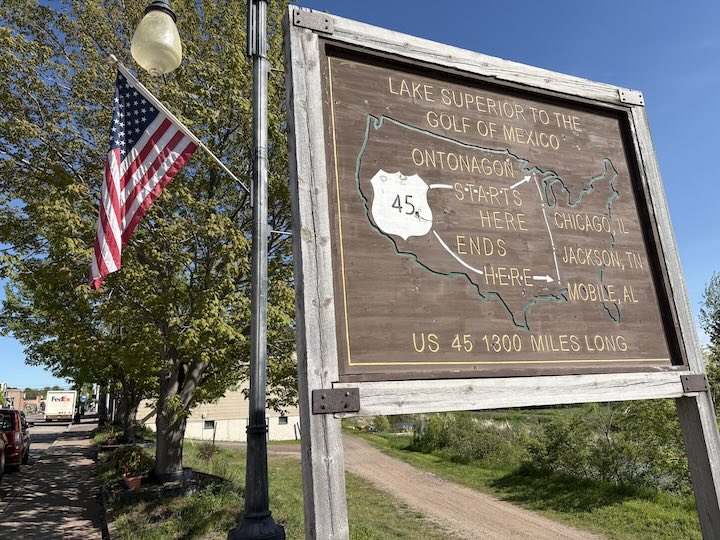
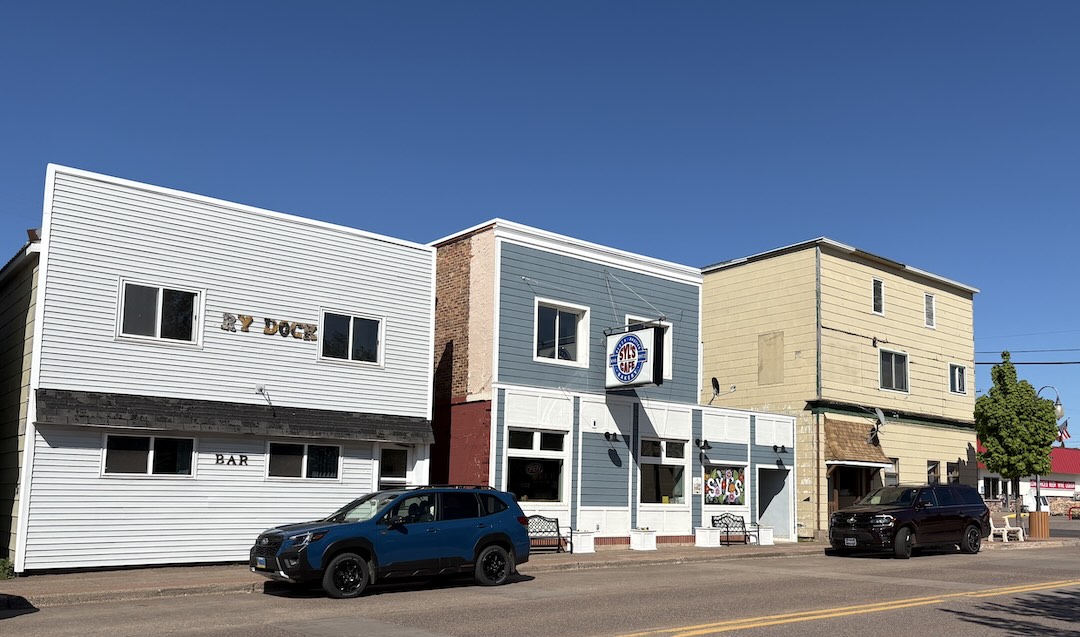
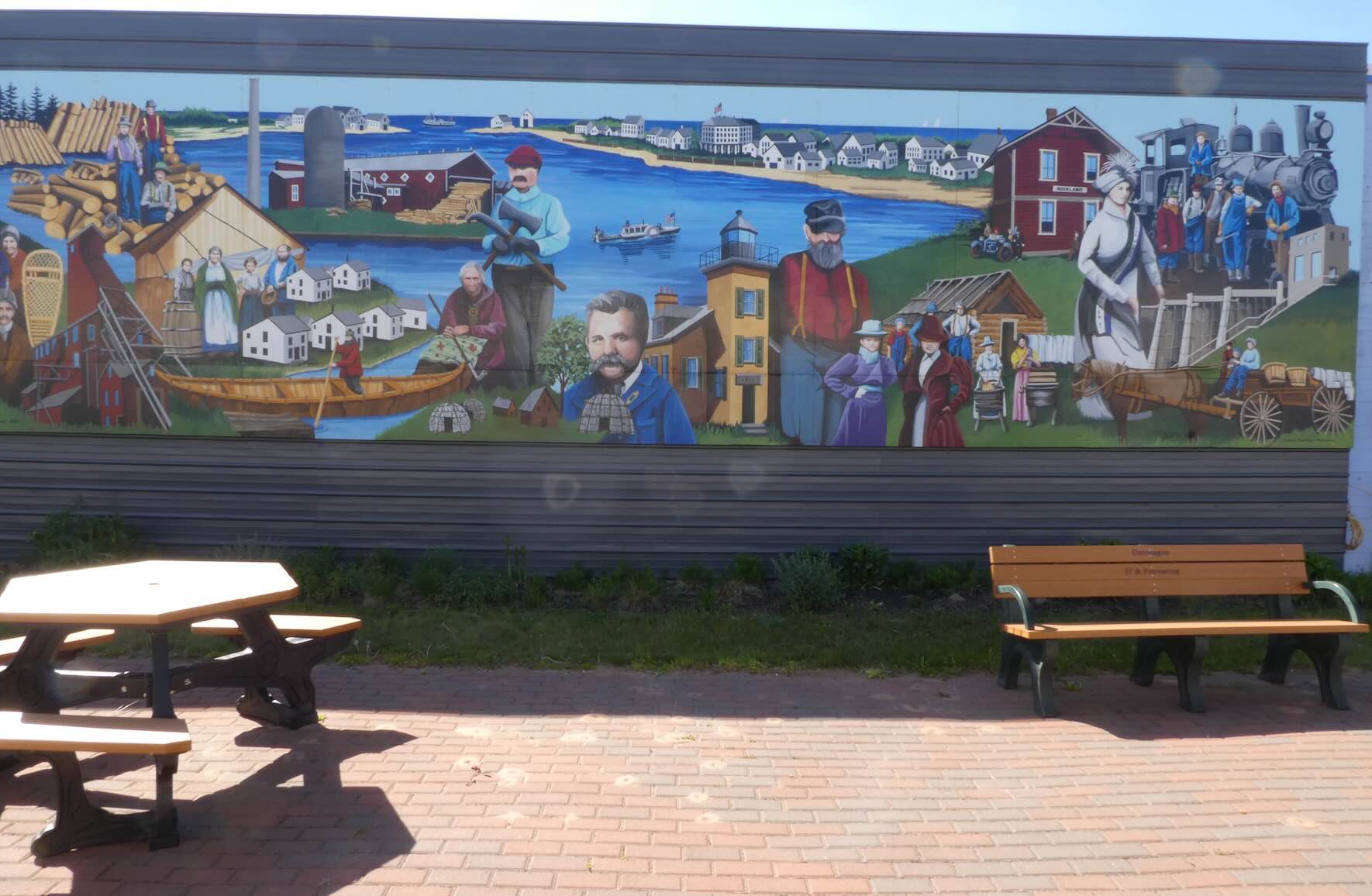
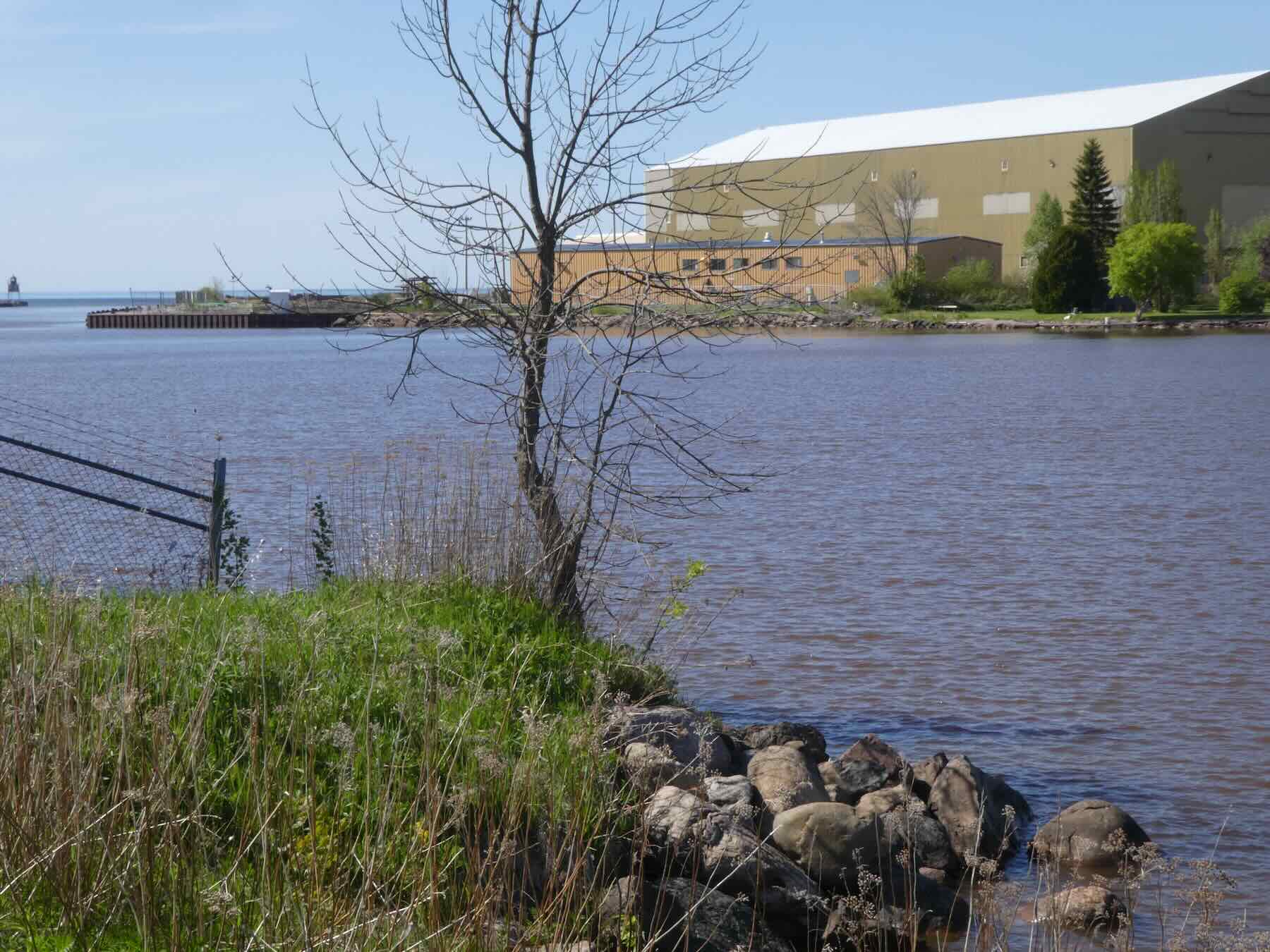
Ontonagon, Michigan, is an old industrial town on the shores of Lake Superior, whose heyday had been the 1940s. The factory was closed, and a new highway spur bypassed the main street, so the locals subsisted mainly through tourism from the state park visitors. The street felt desolate as we drove up but the cars around the cafe signaled that there were customers. I was jumpy when we walked into the crowded cafe, enough so that Ken caught my eye and told me to calm down. Still not used to eating inside restaurants, I took a breath, removed my mask, and looked around nervously, mindful of the distance between people. I had obsessively checked the online data: less than half of the people in the county had been vaccinated. The people around me were potentially dangerous and this was not familiar territory. But I was also hungry and tired of feeling vulnerable.
I heard a motorcycle engine rumble and halt outside the cafe, but I was ordering and the sound barely registered. The rider caught my attention when he entered. Eyes widening, I leaned forward and said in a low but excited whisper, “Ken, turn around and take a look at this guy!” Ken surreptitiously sneaked a look over his shoulder and turned back to me, impressed. The man had to stoop to get through the door. He was gigantic: 6’8”, wearing a black motorcycle jacket and dark sunglasses. He was also completely bald with a beard pulled into a skinny braid of dirty blond-gray hair. He was burly, not fat, but I could only see his upper torso, his legs hidden by the booths and counter. A server came up to him smiling, and he removed his glasses and said something in soft tones which made her smile even more as he placed a takeout order.
The motorcyclist said he’d wait outside. Was he worried about standing inside because of Covid? No, he didn’t look like someone who would fret about such things. The motorcycle was parked right next to the glass storefront window, so I could easily see him go out and take off his leather jacket (which said “Moose” on the back in large, faded letters) and drape it over the handlebars. He was wearing one of those sleeveless t-shirts and his arms, neck and what I could see of his chest were completely covered with blue, purple, and green tattoos: a swirling complex of shapes too worn out and blurry to make out the images. From this vantage point I could see that he had that big belly typical of long-time motorcyclists.
Then he leaned over a box behind the seat, unzipped it, reached in, and eased something out. I gawked and gestured excitedly for Ken to look over his shoulder again. A minuscule black and white dog was cradled in the motorcyclist’s hands. It was an old chihuahua, with a turned-up button nose and wet, bulging eyes, lounging regally and alertly in the comfortable embrace.
The motorcyclist clipped a lead to the dog’s collar and lowered it to the ground below my line of vision. His eyes were tender as he spoke to it. He scooped up the dog and walked across the street to a small grassy area. Putting the animal down again, he watched benignly as it pooped. He pulled out a bag and cleaned up. Within a minute or two a woman ran up to him and gestured animatedly. He smiled and picked up the dog, cuddling it next to his face as she took a picture of them with her phone. Nodding her thanks, the woman scurried across the street to our cafe where she plunked down next to her friends in the booth across from us. Breathlessly, she exclaimed, “He calls her Big Girl!”
Outside, the previously empty street began to look like a street party. Other folks: a couple, grandparents with two kids and some singles walked up to ask him to pose with Big Girl. The motorcyclist was very obliging and seemed to be used to this kind of attention. He took it in stride, pleased to show off his dear companion, yet somehow oblivious to the extraordinary juxtaposition of the tiny morsel of dog and his own larger-than-life persona.
Shortly, the server came out with his order (which was also giant-sized) and he packed the food and Big Girl away, got onto his seat and revved the engine. He looked behind him to make sure she was comfortable. With a loud sputter, the Harley drove off. The magical world bowed out and normal life resumed.
Our breakfast of pancakes and eggs was as scrumptious as the other meals had been and deserved our full attention. Ken grinned between mouthfuls. “You see, your first thought was that this guy was frightening and strange, and he turned out to be a gentle giant.”
I poured some warm syrup on the pancake and sighed contentedly. We had walked into the cafe feeling weary and sullen, with no expectations. Then life showed up with a small offering: this gift. You never know when it’s going to happen or why.
I’m pretty sure you don’t need to go all the way to Ontonagon to find this out.
Wendy Eisner
Wendy Eisner is a writer and painter who spends half the year in Michigan’s Upper Peninsula, on the shore of Lake Superior. She was once a university professor and published numerous scientific papers on the climate, landscape and indigenous people of Arctic Alaska, Russia, and Greenland. She has just begun to publish her literary work.