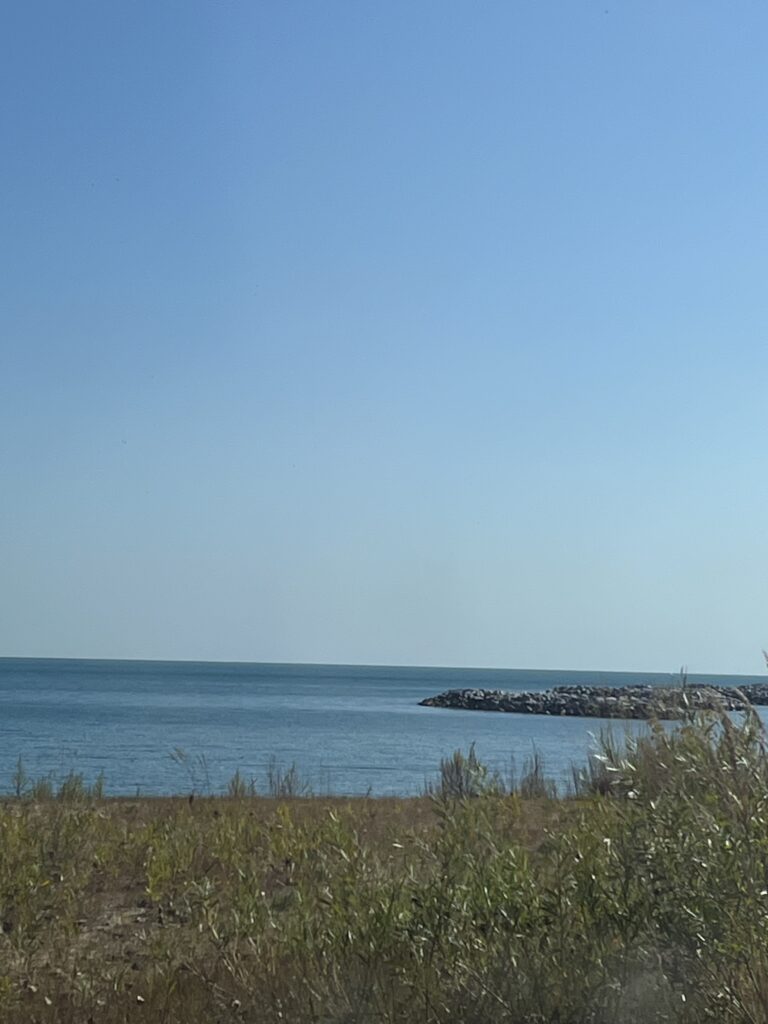
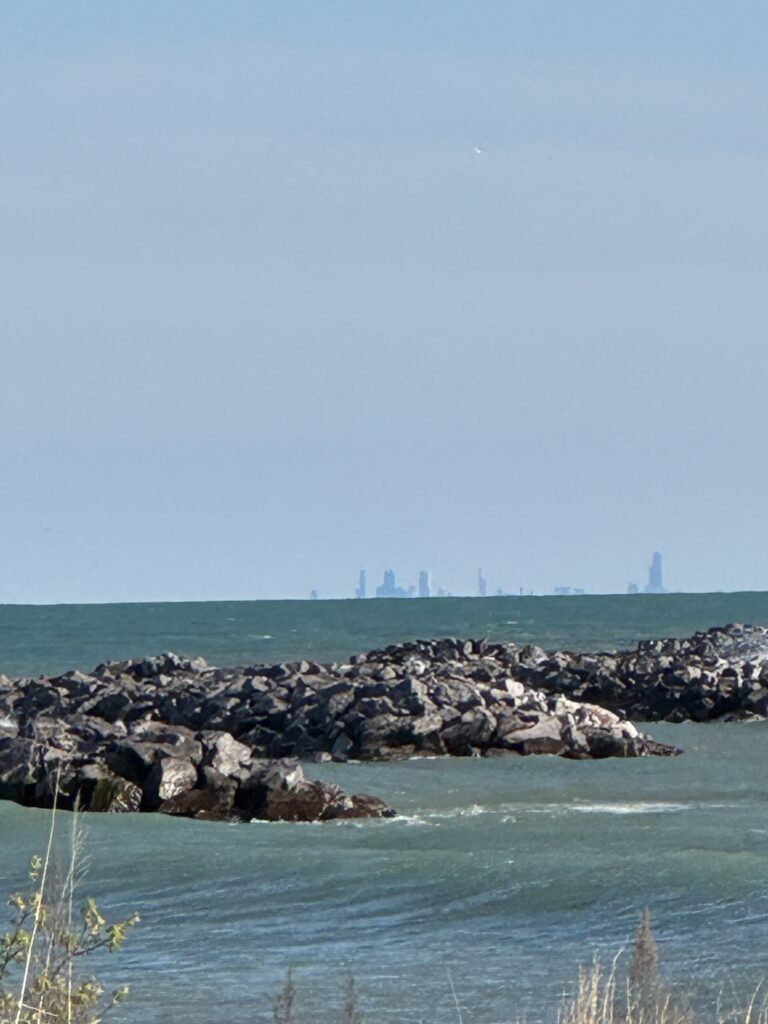
The great lake sits there alone, just before dark, calm yet forbidding while the fat old sun behind me with its rubescent glow of dying light retires to the infinite west as another summer day ends. I look east, north, and south at its gray liquid vastness, its dusky eastern horizon, its dangerous solitude so strong and heavy. Its quiet mystery beckons. What truths do you hold so deep? The scattered wreckage of wooden ships, the spilled heaps of iron ore, the broken remains of fallen metal, the grieving memories of lost souls. Maybe sea monsters with broad midsections, extended necks, small heads, and long tethered tails. From an impressionable young mind that spent way too much time watching Godzilla movies, I grow anxious with sunset’s twilight and the drafty lake chill that comes with it. At dusk, the moist scent of fresh water is at its strongest, for the hard sun is no longer overhead to burn the mist that carries the lake’s watery fragrance. The rich aroma hovers in the textured air, cool and wet, like that of a perspiring lawn just before dawn in late summer. At times the lake’s bouquet is tarnished by the disagreeable fish odor of decaying alewives washed up along the shoreline, the perennial victims of depleted food supplies, spawning fatigue, and brutal winter waters. But the slim, silvery alewife is needed to feed the coho and trout that grow hardy and big for the sportsmen who fish the lake, and so lives on.
Tucked away near the lake is a sleepy village of well-intentioned citizens, curbless streets, and very few stop signs; such as it is, there is only one road leading to the big lake. The townsfolk know it as Main Street because that’s where the post office is located, right next to Young’s pharmacy, the beauty salon, Cory’s meat market, and not much else. About a mile east of this village strip, below the bluff, past the railroad tracks, and into the lowland of wet marshes and tall reeds lies the legacy of long-ago glaciers advancing and then retreating, what the Ojibwe call mishigami: the great water.
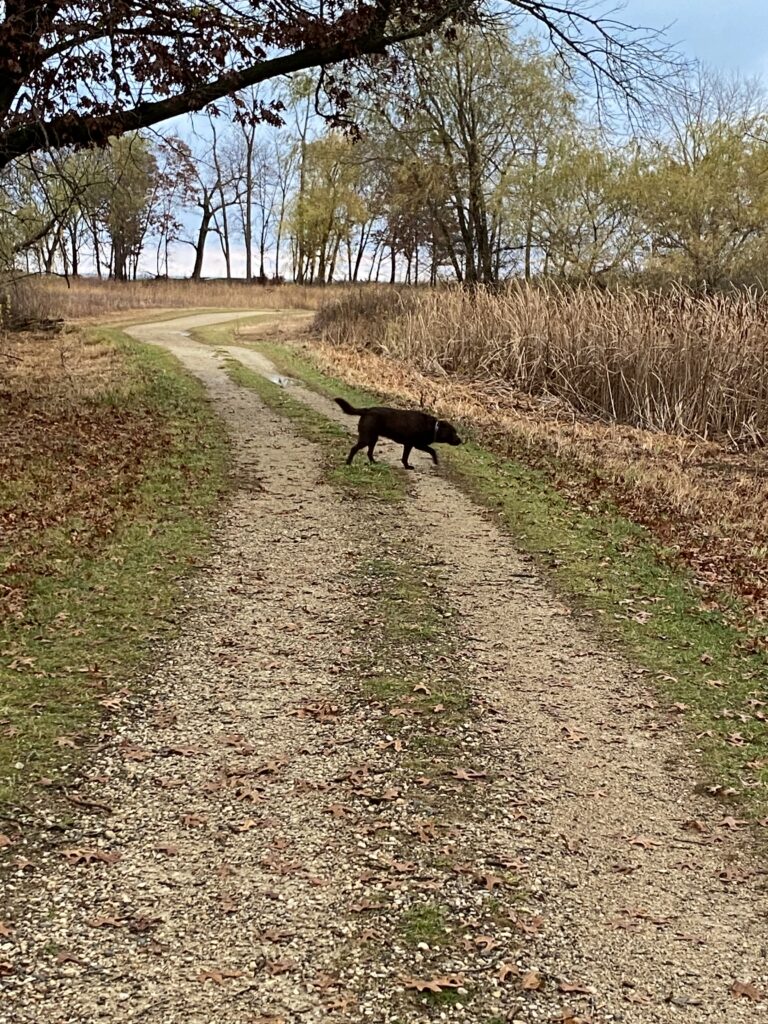
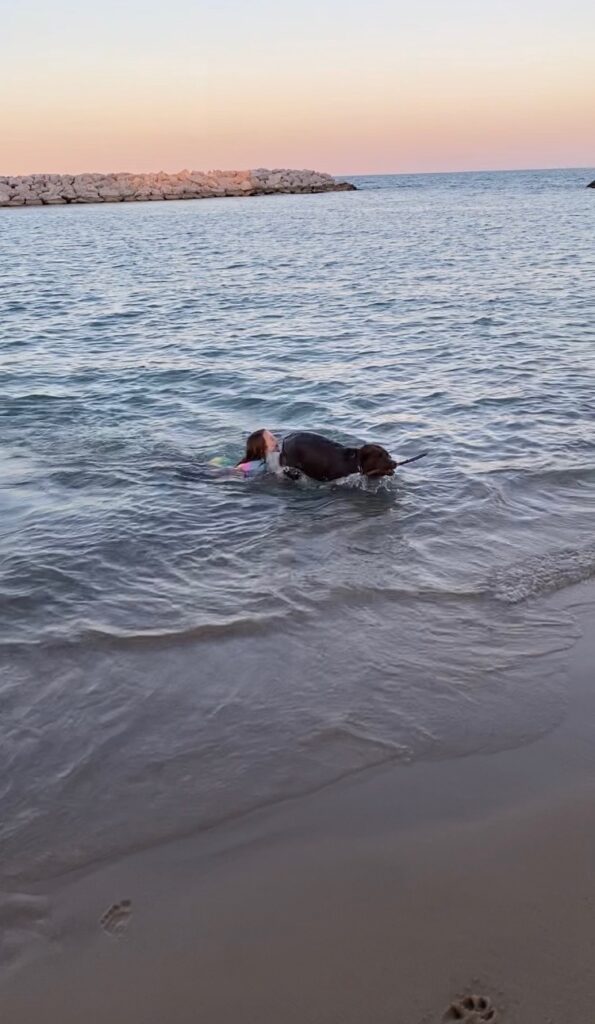
This is where I run my dogs, in the woodland near the lake, among aspen birch and northern red oak. They dive into the bush, scattering about in dense vegetation, jumping into small ponds, chasing deer and squirrels, and always looking back to see if I’m still there. Knowing this, sometimes I tease them by jumping off trail, hiding behind a tree, and when they look back and realize I’m not there, they stop dead in their tracks. I see their worried faces, their where-did-he-go looks; I quickly feel remorse and reveal myself; they breathe easy and continue on. After an hour or so we venture to the lake itself where Rosie and Felix splash into the cold water for a swim followed by a roll on the gritty grains of worn-down rocks.
They are labrador retrievers, a large, stocky, field-and-stream breed known for their enduring energy, endearing character, and keen intelligence. Felix, the yellow lab, is on the darker side of the yellow spectrum with tangerine fur and Rosie, the chocolate lab, owns a coffee-colored coat. Their short, smooth, dense hair displays a light sheen; the topside of their sturdy trunks is even to my knees and their chiseled heads rise above them. Their noses are so sharp they can smell an ant scurrying up a tree. They’re athletic canines who thrive and delight in the waters and wildwood.
It wasn’t always idyllic at the lakefront. At one time there was a tract of a hundred or so homes, some positioned along the brittle shoreline while the others rested behind on the sandy terrain. I would often ride my bike there to visit friends, but eventually the lake took umbrage at the invasive human species and submerged the lakeshore with charging waves of unruly turbulence; houses collapsed into the encroaching waters, roads gave way to shifting sands, leaving a tattered neighborhood of broken homes and shattered spirits. No one could deny the power of Lake Michigan.
The lake evokes another distant memory of a warm, breezy, late-June summer day when death touched me for the first time. After a pleasant day of playing baseball with some local heroes, I went home to eat supper when the neighbor came over to tell me the news: Rod and Sam had drowned. It hit me like a ton of bricks for I was to go swimming with them that day but I wavered and decided to stay back in the neighborhood to play ball. Later that evening, my parents took my brother, sister, and me to see a movie at the outdoor theater, but it failed to mitigate the unspoken and gloomy thoughts that stayed with me through the evening and, once home, into my restless sleep. Those grievous thoughts would haunt me for the rest of the summer.
The lake, I guess, has a dual nature, a dichotomy of sorts, one of tranquility and one of excitement, one of joy and one of sadness, one of invitation and one of caution. When the lake is gentle, I’m reminded of a nature without cruelty; when it’s beastly, I’m reminded of a nature with it. Like the lake, I can be placid and subdued; at other times, stormy and relentless. Like the lake, I evince lightness and darkness, openness and mystery, silence and sound. Like the lake, I sit in solitude, alone but not lonely.
Today I bend down to touch its wet substance, to smell its clean breath. The water is always cold; it never really gets warm, even after months of summer sun. You could say the lake warms up a bit by Labor Day but then it’s too late, we’re back in school; no time for the beach now, and after autumn begins to hurl its frosty breeze, and winter storms rage against the sandy shoreline, and spring rains replenish the aqueous body, another summer returns and the resolute waters will remain cold.
Keith Cooprider
Keith retired as an adjunct professor who taught sociology at the local community college for thirty years. He also worked for judicial services at the pleasure of the chief judge, also for thirty years. He has been a life-long Illinois resident, raised and still resides along the shores of Lake Michigan, where these days he takes long walks with his chocolate lab, Rosie. This summer he plans on readingGreat Lake: An Unnatural History of Lake Michigan(Theodore Karamanski).