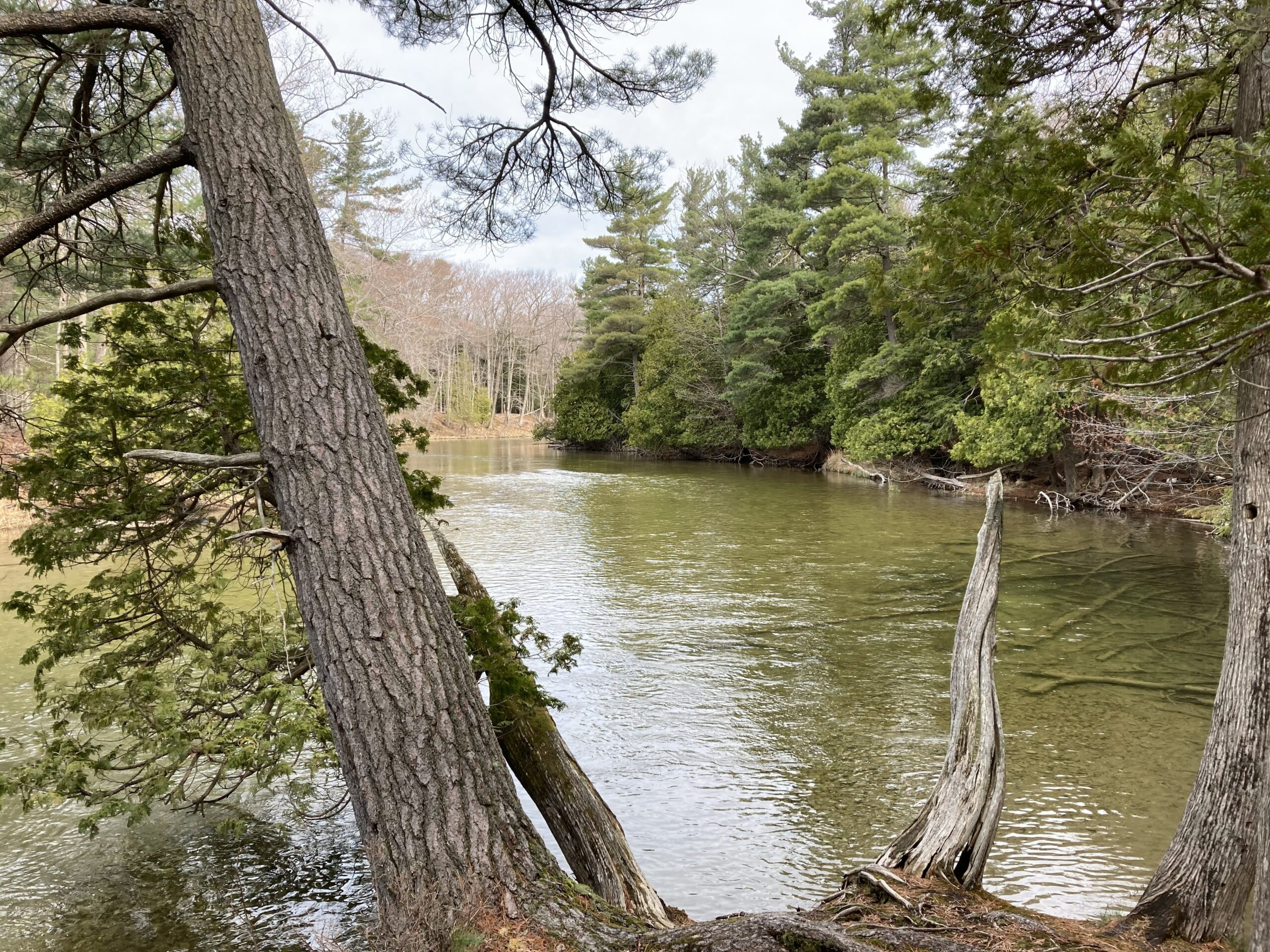
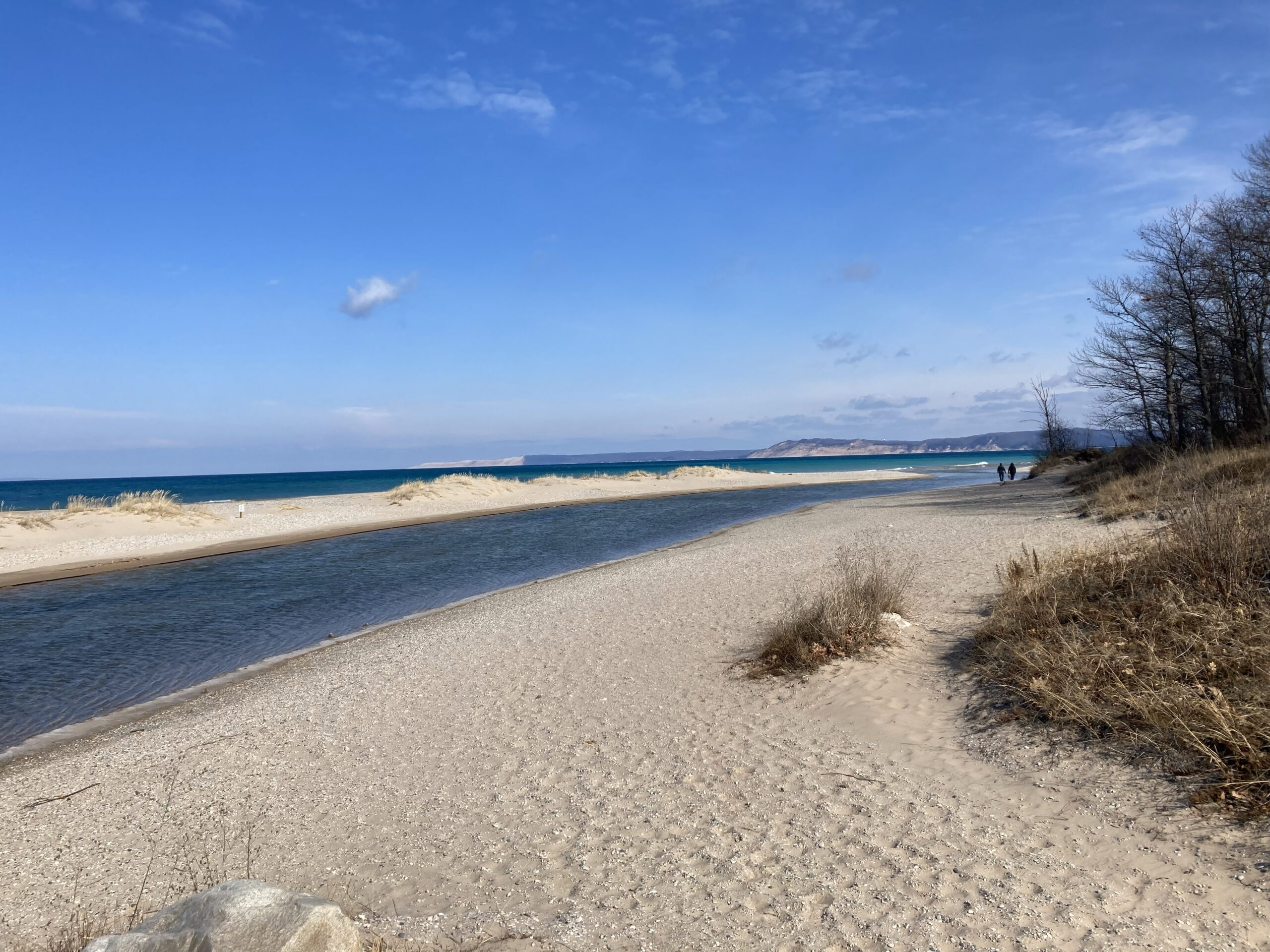
What is the fascination with the Platte River? Thousands of families and rowdy vacationers float, paddle, and motor their way down its serpentine course each year. It pales in comparison to the 1.5 million visitors the Sleeping Bear Dunes receive each year, but it still overflows with birdwatchers, convoys of mobile bars supported by tubes, anglers, and paddle enthusiasts. Is it that it sits accessible on the southern end of the Sleeping Bear Dunes National Lakeshore, or that the current carves its easy slide down into the low dunes, so safe a parent holds no fear for a swimming child with water wings?
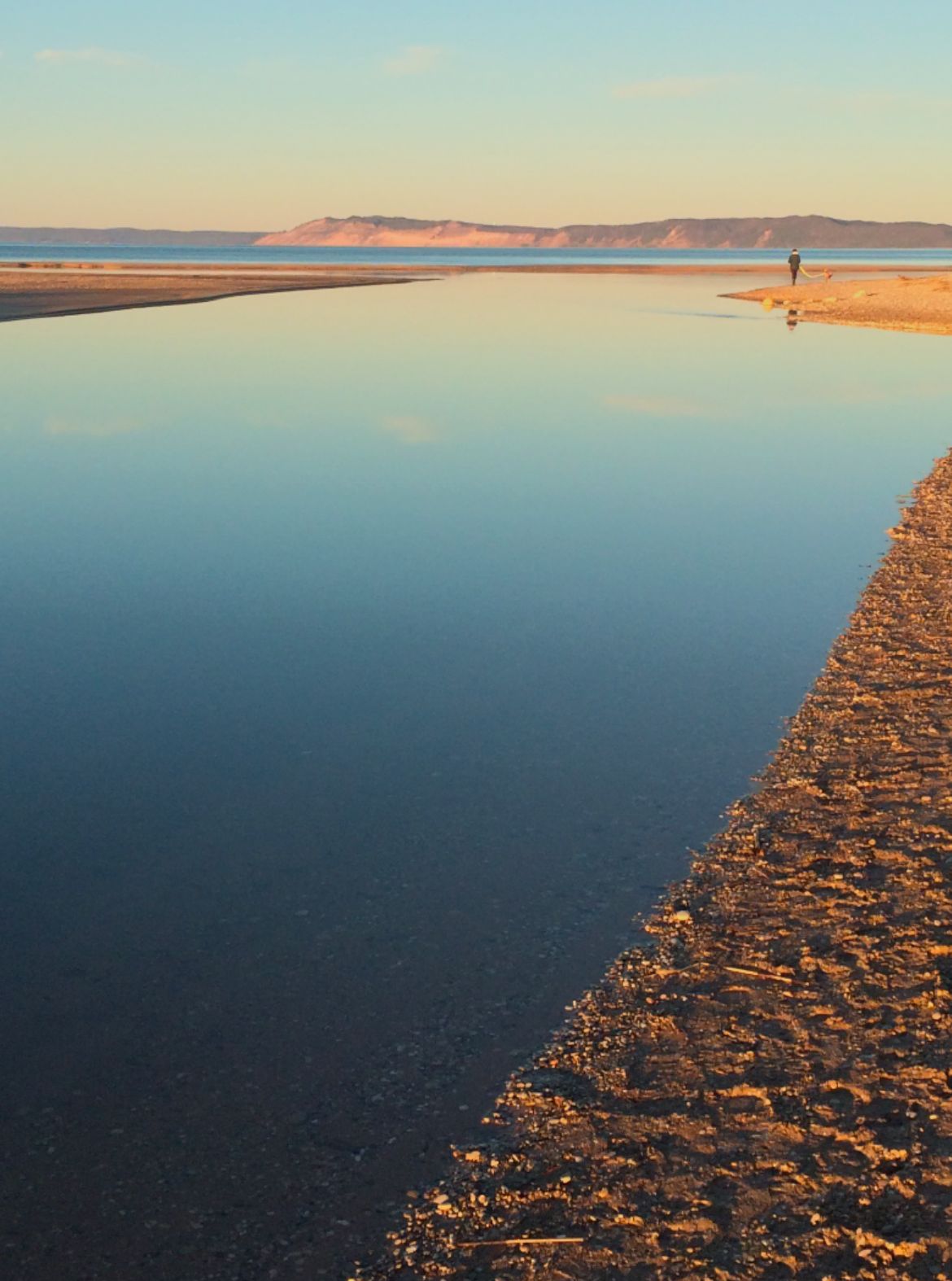
The ribbon of smooth current, carrying you under the overhanging cedars, hemlocks, and red maple, their branches humming in the afternoon sun, may draw us in for the first time. However, I suspect it is the permanence of it all that keeps us coming back, year after year, from season to season. The river has been here before the sow bear, as the legend is told, collapsed upon the shore to wait for her cubs on their fatal swim across from Wisconsin. The river was spilling over pebbly loam into Lake Michigan as the cubs were raised into the Manitou Islands, and the matriarch became the impressive slide of sand on the north end of the bay, now named in her honor, the Sleeping Bear. The river has seen groups of drunk college kids on summer break, shooting beers and roasting brats on the cast-iron grills along the mouth of the river. It’s seen a host of children’s first swims, holding these young beings, clean and pink under the sun, within the upturned arms and predetermined buoyancy that is demanded of the river and the laws that constrain it. The Platte River saw salmon reintroduced to the Great Lakes, the roiling mass of salmon, so consumed with procreation, that they slowly deteriorated within the river as they pushed upstream. Flecks of their flesh and being line the waterway, a scattering of hope for a new generation of these freshwater giants. With the salmon came the frenzy of fishermen going out into the breakers, where the river is disassembled in the first meeting of lake and current. These same fishermen, full of certainty that coolers will be filled and that the fish must rise to their lures, often are forced back from the river’s mouth. Only to be marooned farther up the bay when they cannot motor past the sand bar and rolling mass of the undertow current of Lake Michigan. It has seen freighter ships wallow and slowly depress beneath the waves among the reefs on the leeward side of the Manitou Passage, and yet the river still spills, in perpetual motion, into the hungry Lake at the mouth.
The river, in its immemorial wisdom, does not judge between morals; it does not weigh our actions on a cosmic scale, nor seek punishment for those who defile the banks. It simply carries each as precious cargo, gently pushing them into the roiling water of Lake Michigan. It seeks only to perpetuate the natural order of things; that water will flow where the land drops away, and sand, clay, and small islands must yield to the constant search for downhill momentum. It joins the grains of sand, each blowing in and among the marram grass, regardless of whether the crowds of people are aware of anything beyond their small wingspans, radiating from their inflated rubber chariots. The river rises, ebbs, and recedes as each season passes, and remains unchanged, amidst the turmoil around it. Wind and waves may batter it, ice may threaten to block it in early spring, but the river will always meet the great lake that lies in waiting.
Is this why we flock to the sandy riverbed and clear waters, to feel the weight of the whole world, contained within this small river? The motion of space and tumult of time, slowed as it creeps to the river’s shore? When the crowds arrive, as they do each June, is there something pushing us to this particular place, a needle somewhere within, pointing to a truth beyond north? Perhaps it is that among the rolling sand, soft blowouts, and depressions along the banks of this small river, between the horseshoe bends, we may find secrets that have sat undisturbed by human hands. If the geologic forces that formed the earth have motive and desire, this river, with its long stretch, soft tendrils that trail back into the cloudiness of time, might give us the best glimpse into a world before we inhabited it. When I slide into the gentle caress of warm water, I feel myself slipping, out beyond perception, to somewhere else before the first wave rolls in from the lake. I am enveloped in this eternal current and go drifting past into things unknown.
Dirk Ruff
Dirk Ruff writes about the natural world, our observations in it, the historical context that shapes it, and our intricate relationship with the “outside.” Ruff is a native of Michigan and a graduate of Northern Michigan University. He is passionate about rivers and their free-flowing ecosystems. He can be found canoe-camping and running whitewater throughout northern Wisconsin and Michigan’s Upper Peninsula. He lives between the headwaters of the Au Sable and Manistee Rivers in the northern lower peninsula of Michigan with his wife, artist Anna Ruff. He has three books published: “Perception at the Roots,” “Among the Branches,” and “Cross Currents.”
dirkruff.substack.com
www.lulu.com/spotlight/dirk-ruff