“The mass grave is a grave of names”
– Joy Harjo
I saw you referenced on the map,

something new I had not seen before,

and so I drove to you, exploring the hills

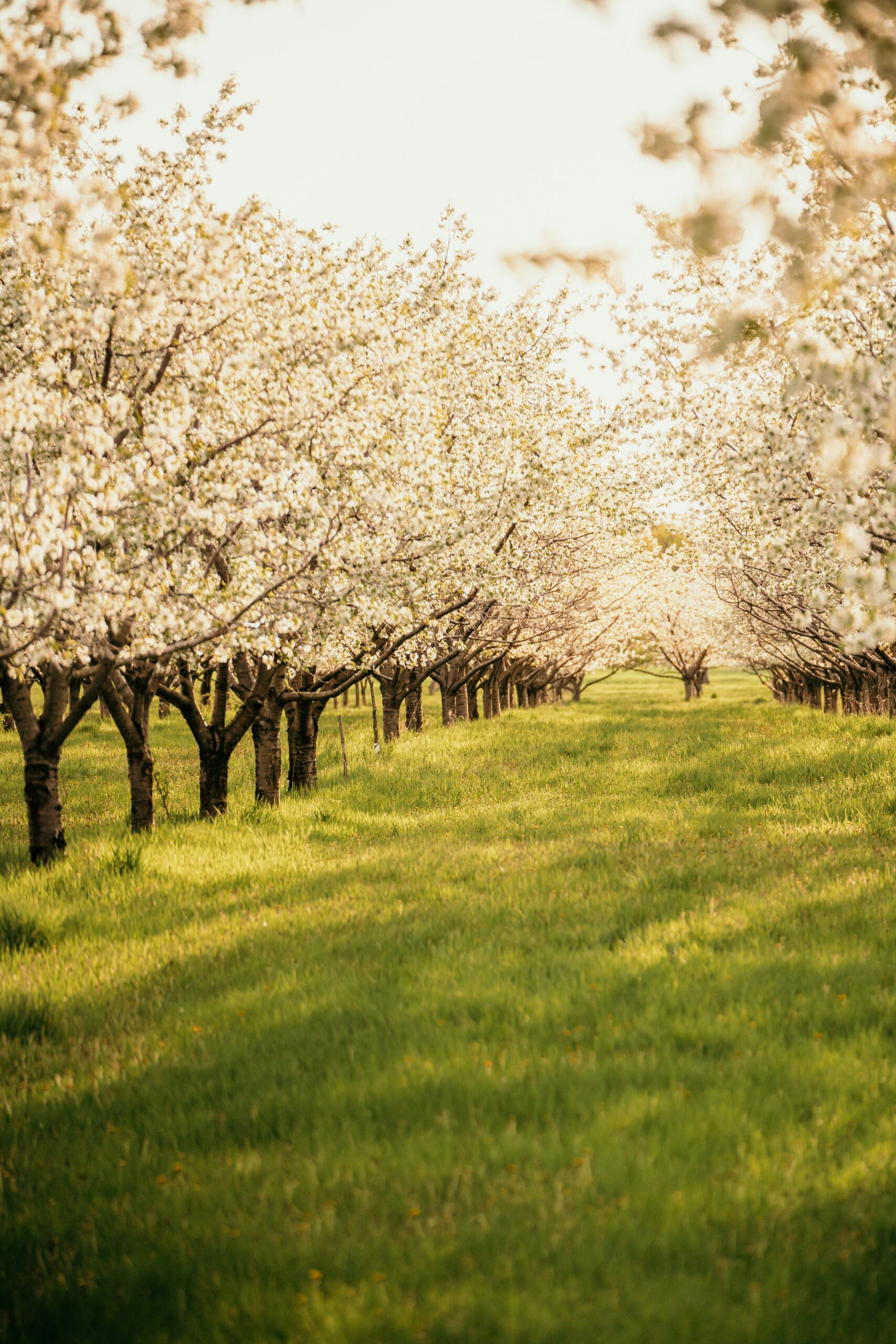
and cherry farms by Lake Michigan.


I arrive and am at first confused.

I see rows of white crosses with no names

or dates marking the 160 graves I count.


Just three stones have names,

each noting you served in the military,

each with a small American flag by its side,

each held by a plaque of the American Legion.


A young woman places wildflowers

on the graves. I ask her why

they are not marked. She replies,

“This is an Indian cemetery.

The bones were found in mass graves

when they built the mansions atop the bluff.

I am the gardener at one of them.”


I turn to read a bronze plaque on a bench

beside the grass in which you lie:

“Onominese Indian Cemetery 1851.”

She pauses as I take this in, then adds,

“There is much we could learn from them.”

She leaves and returns to the mansion.


Here you fished until

you were fished out by the Fishers of Men.

The mission of Northport, just getting started,

sent a pastor to preach each Sunday,

a mistress to teach your children,

and an “Indian Farmer” to explain agriculture

so that you would settle

and cease your nomadic ways.


Loggers leveled the great forests,

homesteaders plotted the fertile land,

and you died in mass

of smallpox and diphtheria

brought by the teachers of civilized ways.


I came each summer not far from here,

a good, proper, white, Midwestern boy,

to learn golf, tennis, and sailing,

the leisure sports of the comfortable,

so good for small talk and business.

We were oblivious children

taught by oblivious adults

to be so.


Only the bright, white crosses remain,

the three plaques to thank you for unsought service,

and a large American flag that flaps presumptuously

– and yes, obliviously –

atop a tall, steel flagpole

in the wind off the water.


I saw you referenced on the map,

something new I had not seen before,

and so I drove to you, exploring the hills

and cherry farms by Lake Michigan.


Your mass grave is a grave of names.
Gregory Shaffer
Gregory Shaffer is the Scott K. Ginsburg Professor of International Law at Georgetown
University and immediate past President of the American Society of International Law. He has
published poems in a dozen journals and a chapbook of poems entitled Forest. He has published
twelve books of non-fiction.
You can find Gregory here: https://www.law.georgetown.edu/faculty/gregory-shaffer/ and
https://www.gregshaffer.com/