I prowl the backroads in a dusty, battered old Ford truck that nobody would give a second look, especially folks of the law enforcement persuasion. To the outside world, I’m just another young Michigan farmer in a John Deere hat. A clodhopper. A rube. I avoid conversation when I can, but when I must I just grin and nod and say things like “worthless as tits on a bull” and “finer than frog fuzz.” I’ll squint at the sky and say whether I think it’ll rain.
My need for stealth is simple: I deliver drugs in my county for serious people who lack morals or even much impulse control. It’s something you can either live with or not. Does that mean I lack morality, too? I don’t know. I think morality is a luxury—pie in the sky for folks with fancy jobs and big houses and happy families. People whose drug use won’t often rise above Tylenol. Maybe morality isn’t a thing for someone like me who barely escaped a family of inbred nitwits, and with no real opportunities other than as a cog in some wannabe gangster’s network.
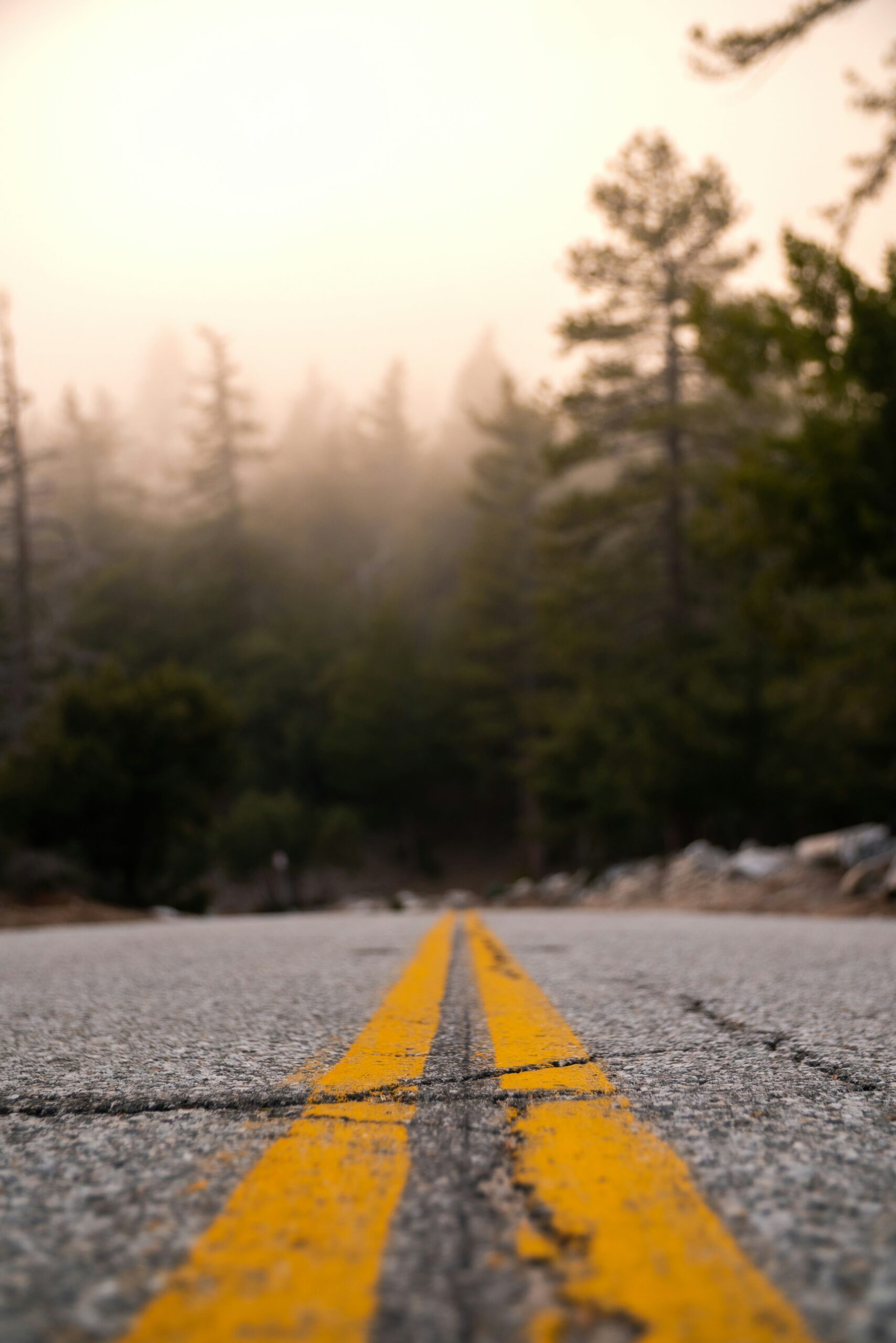
Old Highway 51, a pothole minefield, runs straight through my territory, the county, and Old 51 is where every run starts and ends. It’s the main artery feeding all the county roads. I call it Roadkill Alley because of all the dead animals that litter the pavement in red smears and piles of scattered fur or feathers. You see the roadkill in ditches, too, and even fields where some manage to crawl before dying.
Mostly it’s deer that sometimes survive initial impact long enough to stagger a few feet into a field. The raccoons and dogs and cats pretty much buy the farm instantly. An explosion of blood and guts and shattered bones. That’s mostly what you see along Roadkill Alley. Sometimes I’ll see the pitiful remains of some small animal I don’t recognize and wonder what it is. I’ll try to picture it alive.
Just the other day I wondered if I’d seen a smashed head marmot belly up alongside the road. Some folks call them woodchucks or groundhogs. That same day, I saw a live possum, in daylight no less, walking along a fence around a farmhouse, but it was headed toward the road and so probably another KIA in the making.
It’s spring now and some days warm enough to keep the windows down and that’s when you get the full force of roadkill—the smell. It’s hard to describe the lingering odor of so much death. It’s maybe like something out of a dark, dank sewer. The smell of decay. The lingering mist of death, if I can be poetic.
One day I laughed out loud because that Lynyrd Skynyrd song, “That Smell,” suddenly blared out of the truck radio. I knew that the song, though, was about human roadkill and not animals. I’d done some reading about that band. Some of them died in an airplane crash and so human roadkill for sure. Nobody’s immune to becoming a casualty by the side of a road.
I’ve driven Roadkill Alley so often on my rounds that I kind of kid myself I could drive it eyes closed. I know distances by feel and not mileage. Natural landmarks instead of roadside signs. For example, I know a certain turn just ahead because of an old deer carcass, legs poking up in a field. I wonder how long that carcass has rotted there. At least one winter, that I know of. Maybe a farmer plows it under. That’s sort of a burial, I guess.
That day I turned down Deer Carcass Road, my windows down, air ruffling my hair, my left arm dangling loose over the side of the door. I trailed a dust cloud. It hadn’t rained in a while. That’s something a farmer would note. They have a language all their own, just like drug mules do, too. But I prefer farmer lingo. It’s colorful, all about nature and growth and yields and whatnot.
As I rounded a turn, I caught a glimpse of something orange huddled at the base of a tree by the road. Just a quick look, mind you, and then my eyes back on the curve. I assumed it was probably just some flavor of roadkill. There’s not as much of it along Deer Carcass Road. There’s less traffic and slower, too. The odds are better for animals along that road. That heap of orange told me that maybe it was a cat back under that tree. Maybe that was as far as she – it?—got, I supposed. That was – unfortunate.
We had a cat when I was growing up. It was gray and white and called Snooky. I always felt that name just wasn’t properly dignified for a cat, who are great hunters. I always felt we should have named it Tiger or Hunter, but Snooky it was. It wandered off one day and I never saw it again. We lived near a road in those days and so I chalked it up to the inevitable clash between beast and machine, the flesh grinders.
I’ve never hit anything. Honest to God. Knock on wood. That’s a point of pride for me. An honor. I keep my eyes peeled. I don’t drive fast. Never drive fast if you’re a drug mule. The law enforcement boys are watching for that. But I’ve braked hard and suddenly a few times when one of nature’s finest wandered into my path. One day, in broad daylight, I saw a coyote by the side of the road ahead. It just stood there, gray and furry, with sort of dead eyes. It stared at me as I went by slowly. I pulled off to the side of the road and looked for it in my rearview mirror, but it had already disappeared back into the forest. Smart coyote. I wished it well.
After my delivery far down Deer Carcass Road, I was done for the day. I took my time on the way back, to see the sights and enjoy clean air while it lasted. I saw hawks circling lazily in the sky. Roadkill was on their radar, no doubt. Eventually they’d drift over to Old 51, where the pickings were far better. Old 51 was like a restaurant for predators. Everything was on the menu.
I saw a bald eagle skim low over a field, hunting. I’d see lots of hawks, but an eagle was rare. I slowed down to a crawl to watch it glide gracefully with the air currents. I kind of wished I had a life with that much grace in it. I wondered if it was too late for that. People sometimes say it’s never too late to change, but often it really is and you’re stuck because you don’t know much else and can’t find an off ramp. You ride it through to some inevitable end.
I shook those thoughts off and gripped the steering wheel with both hands. Up ahead was the tree and the curve and that speck of orange. When I got close, I saw the orange speck move. So, not yet roadkill, but maybe well down the path. I hesitated but pulled over anyway and saw it was an orange cat. It meowed pitifully when I stood over it. I knelt and stroked its fur gently behind the ears.
“What’s up, Kitty? Not feeling so good?”
It meowed loudly when I touched it along its rear end and a leg. I saw some blood there, but not really a lot of blood. I figured maybe it had survived a glancing blow from a car when it crossed the road. The leg didn’t look bad to me. Not shattered and dangling, for example. There wasn’t any farmhouse for quite a way in any direction. Maybe it had been dumped. Or got lost. It looked healthy enough other than the bloody leg.
I didn’t think I could just leave it there, on its own.
“You think you’re up for a little ride, Kitty?”
Its eyes were consumed in sorrow. I picked it up slowly and it struggled some but not a lot and meowed again when I touched the leg.
“I’m sorry, baby. I’ll be more careful.”
It seemed to melt into my arms and go limp. It was done in, out of gas. I put it on the truck seat as gently as I could and it meowed some more. It looked at me with pleading eyes. That reminded me of our old cat Snooky and my eyes got moist.
“I’m going to get you somewhere, little baby. You just hang on – okay?”
It looked up at me like maybe it understood and dropped its head against my thigh. I drove us into a town that had a vet.
Everybody at the vet was nice. A blond girl assistant shrouded the cat in a pink blanket and took it through a door, back to where they worked on the animals and saved the ones they could. I vaguely wondered how many died every day. Maybe this was orange kitty’s lucky day. Or not. A spin of the wheel to see where the little black ball lands.
A middle-aged brunette behind the counter asked me the cat’s name and I hesitated and finally said I had no idea that I’d picked it off the side of a road. She smiled and told me I was a good Samaritan and that caused a sudden chill to ramble throughout my body. I thought I might even cry, but it had been so long for that, and I couldn’t quite get it working. I sniffed a few times and dabbed an eye with the back of my hand. I glanced at her nametag – Alice.
“But we still need a name for it, for the paperwork,” Alice said.
I looked into her eyes for a moment. It felt like she could look directly into my soul—what was left of it, anyway.
“Snooky,” I finally said. “How about that?”
“Perfect.” She made a note on a chart. “And your name, sir?”
“Do you really need that?”
Alice had a skeptical look. I knew that at the end of the day, compassion was great and all that, but they also needed to get paid. Everybody wants to get paid. Me, my wannabe gangster bosses, the vet. We’re all selling something. I put my hands on the counter and looked down.
“Paul,” I lied. “Paul Butler.”
“And your address, Mr. Butler?”
I gave her a made-up address a couple of towns over, toward the county line.
“And how will you be paying today, Paul?”
I hadn’t thought that through and I stared at her for a moment, but she seemed patient. No doubt she’d delivered a lot of financial bad news to pet owners and could sympathize with them.
“Well, I can give you cash.”
I always carried a good amount of that, some mine and some not.
“Cash works,” she said smiling. She put the chart down and gestured toward chairs in the waiting room.
“The doctor will speak with you shortly.”
I was thumbing through a magazine about southern living when the vet doctor appeared – Dr. Gentry. She was a thin blond somewhere in her thirties, I reckoned, and wearing pale blue scrubs, her hair done up in a ponytail that swished back and forth, kind of like a metronome. It’s funny what you focus on when you’re in the middle of something you’re not sure you should have stepped into.
“Mr. Butler?” she said, offering a hand and it was warm.
“Paul.”
“Well, Paul, we’ve examined Snooky and there aren’t any broken bones, thank goodness.”
It occurred to me that I hadn’t thought about what comes next for the cat.
“Well, that’s good to know, doctor.”
“So, we put a few stitches in her leg, but overall, she’s just fine. We gave her a little something for pain.”
I nodded. So, Snooky was a girl. The one I had as a kid was a girl, too.
“Okay, then,” I said, not sure what to do with my hands and I ended up clasping them together, like maybe I was praying. I eyed the door a couple of times.
“So, she can go home now,” Dr. Gentry said, smiling again. She had beautiful, pearly white teeth. They gleamed.
“Home,” I said flatly.
“They’ll bring her out in a minute.” She offered her hand again. “It’s your lucky day, Paul.”
“More like Snooky’s lucky day,” I said quietly.
“Well, it’s a great day for you both. How about that?”
She turned and went through the door, and then I made eye contact with Alice behind the counter and she waved me over and I paid her, her eyebrows arching slightly when I peeled hundred dollar bills out of a thick roll.
“Keep the change,” I said.
“We’ll just put it in the tip jar,” Alice said.
“Whatever works.”
Alice sold me everything we’d need: cat food, water and food bowls, litter and box and whatnot, and she donated the pink blanket. I carried Snooky out to the truck and made her a little nest on the seat. She looked at me with eager eyes. They were a little glassy from her meds. When I gently rubbed behind her ears, I heard her purr very softly. I just sat in the vet lot for a few minutes, listening to Snooky purr. The sun was warm and caressed the back of my neck. Something was happening and I didn’t know what it was exactly, but I wasn’t complaining. A warm feeling crept up from my ankles and consumed me.
Snooky fell asleep, her head against my thigh, and I drove home and collected my clothes in a couple bags and retrieved my hidden stash of cash, all the while vivid photos from that southern living magazine back at the vet shooting across my mind like a slideshow. In the photos, everything in the houses was neat and clean and orderly. I imagined the people living in them were that way, too.
When I started the truck, Snooky woke up and raised her head for a moment, looked around, sniffed the air, and then eased her head back against me. She sighed heavily. At the first crossroads, I looked both ways, hesitated, and inhaled and exhaled slowly. Finally, I turned south. I wasn’t sure where we were going or even where I wanted to go, but I knew it would have to be some place where I could roll down the windows and the air didn’t smell like roadkill.
Michael Loyd Gray
Michael Loyd Gray is the author of eight published books of fiction and more than fifty published stories. His work has appeared in Prairie Schooner, New Square, Narrative Northeast, La Piccioletta Barca, Porchlight: A Journal of Southern Literature, Libre, The Brussels Review, Amsterdam Review, and Main Street Rag, among others. A member of the Society of Midland Authors, Gray has received the Alligator Juniper Fiction Prize, The Writers Place Award for Fiction, and the Book Excellence Award. His novel Well Deserved won the 2008 Sol Books Prose Series Prize, while Not Famous Anymore received a support grant from the Elizabeth George Foundation. His other novels include The Armageddon Two-Step, Exile on Kalamazoo Street, The Canary, which explores the final days of Amelia Earhart, and the young adult novel King Biscuit.
His novellas Busted Flat, a Literary Titan Gold Award winner and Eric Hoffer Award finalist, and Donovan’s Revolution, recipient of a 2025 International Impact Award for Contemporary Fiction, a Literary Titan Gold Award, and a 2025 Book Excellence Award for Historical Fiction, appeared in 2024. His subsequent novella, Night Hawks, was released in February 2025. His later publications include the novel The Writer in Residence and the short story collection The Space Between Now and Then, both scheduled for 2026, followed by Emperor of the Mundane, forthcoming from Regal House in 2027.
Gray earned an MFA in English from Western Michigan University in 1996, where he was a Phi Kappa Phi National Honor Society scholar and fiction editor for the literary magazine Third Coast. His studies included work with MacArthur Fellow Stuart Dybek and novelist John Smolens. He holds a bachelor's degree from the University of Illinois, where he studied with Flannery O’Connor Award winner Daniel Curley. Before pursuing his writing career, Gray spent ten years as a newspaper staff writer in Arizona and Illinois.