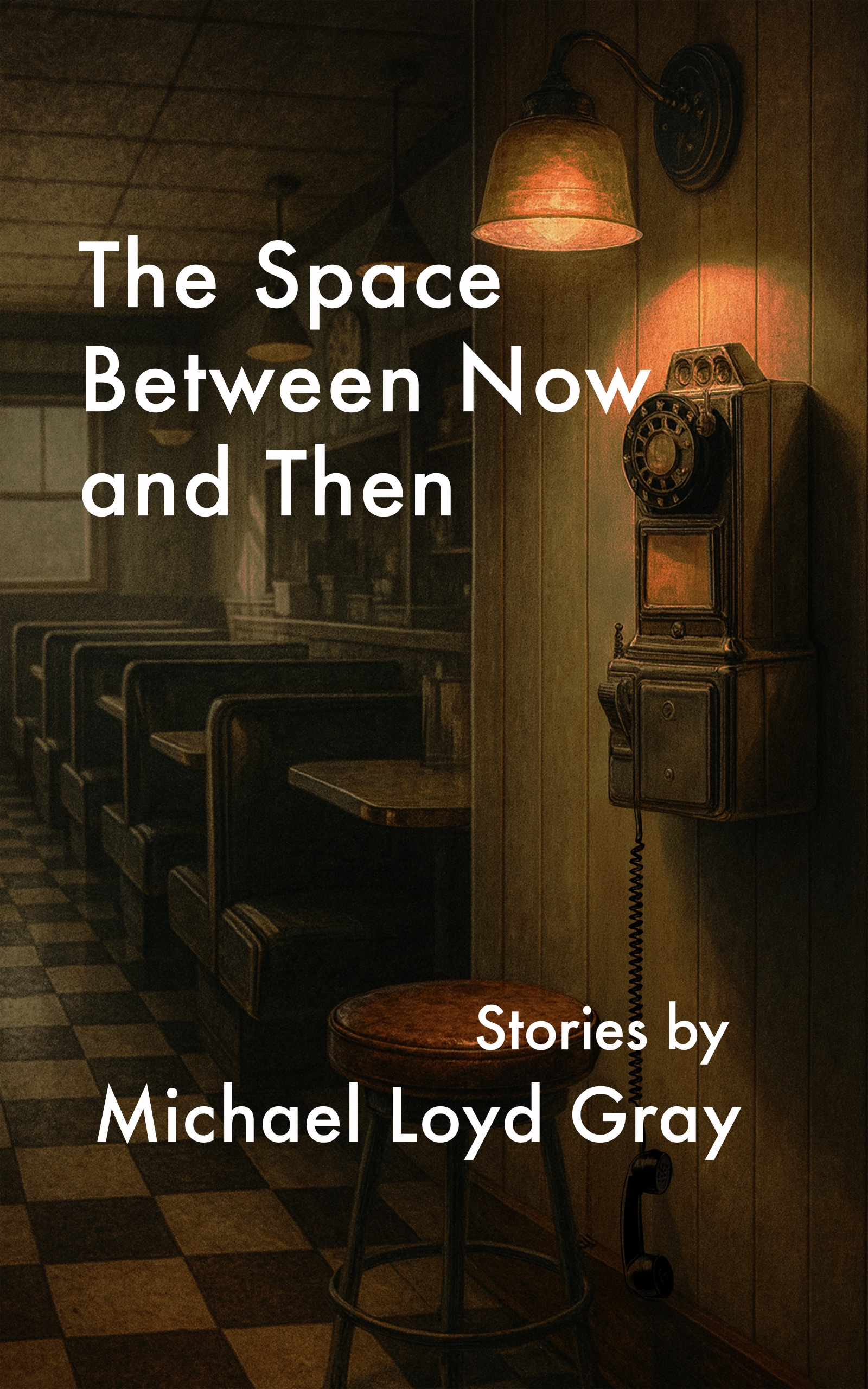
Interview with Michael Gray about The Space Between Now and Then
Michael Gray appears on Zoom idly strumming a guitar, which he proceeds to hold throughout the course of the hour-long conversation. It seems almost unconscious, the comfortable gesture of a man easy in his affect. It’s a striking difference from the characters in his new collection of short stories, The Space Between Then and Now, Midwest men who seem weighted by the uneasy expectations of stereotypical manhood.
It’s these expectations — the ones they set for themselves, the ones society places on them, the expectations that they imagine society places on them — that animate these knife-sharp, well-observed, and sympathetic stories. The expectations, and the failure of the characters to live up to them, create that space between now and then.
Gray explains that the title came to him almost subconsciously. “For some of these men in these stories, the space between now and then…the now part is who they’ve become. And the Zen part asks, is there an undefined future ahead of them? Back when they were younger, they still had possibilities. They were once filled with possibilities, but now they’ve become something fixed, and in many cases unchangeable.”
The men in his stories — and the characters are not all men, but the stories are rooted in the experience of men in the broader Midwest — struggle with their feelings. They struggle with their understanding of themselves or their place in the world. They have an idea of who they should be, but that understanding is rarely realistic and even less often healthy or positive.
Gray roots that experience in his own life, growing up in central Illinois. “I grew up in a household where everyone other than my mother was conservative. And the expectations were that you end up working in a factory or a trade, and going to college was some kind of luxury, that was out there. Back then, the avenues of opportunity for men, young men, were pretty much located in this myth of manliness. And strength, outward strength. A stoic outward appearance of manliness.”
You can see this myth in nearly all the characters in Gray’s stories. Perhaps the best example of it is in “Clouds and Shadows,” where a young boy goes hunting with his father and uncle. It’s cold, as you might imagine it would be in such a story, but the father doesn’t feel the cold. “He once told me that cold was mostly in a man’s mind. He didn’t feel the cold because he didn’t allow it. Discipline.”
But this stoic Midwestern manliness is nothing more than an archetype, an invented image to be lived up to. Gray laughs almost ruefully, ”It’s an illusion. My real sense of this is that he’s deluding himself, that he is really buying into wherever he got the model for how to be a man, probably from his father. It is something that he has accepted and stepped into. But he is kidding himself. He’s cold. He’s cold as anybody else. But he can’t… he can’t admit it.”
Now, reading this, you might imagine the father to be a particularly hard case, and he is. He has no patience for fools and lives by his own internal codes. This is true for many of the men in the Gray’s stories: they live by ideas of themselves that they can barely articulate, or perhaps feel that articulation would be a betrayal of those same codes.
This paradox can lead to difficult lives and shattered relationships. It can lead to lives unexamined. But one thing that is never forgotten is that not being able to articulate emotions doesn’t mean those emotions don’t exist.
“Clouds and Shadows” ends with an almost shocking tenderness. That tenderness, though, is brought about by a sudden, bloody turn of events. Gray explains that for men like this, whose emotions were buried by their fathers and the expectations of their stunted societies, it “literally takes a trauma to get to the things they are capable of doing.”
There is heart, there. Gray recognizes that his characters are capable of being better men, better fathers, better sons, better husbands and partners. For some, it comes, if not easy, at least naturally. A diner owner in a small Wisconsin town offers gentle advice and support to his waitress, who is about to take the last train to Chicago with a charming alcoholic trucker. He understands her need for something to happen in her life but is there to help her in case things go sideways, as they so often do.
That description says more than the diner owner ever does. Gray’s men, even the ones whose tenderness materializes without trauma, rarely get to the root of their discontent. It’s a neat trick for an author, to be able to portray inarticulateness without showing off.
Lois, the waitress in the story “Last Train to Chicago” is not a rare character in The Space Between Now and Then. Women are in many, if not most, of the stories. We are rarely privy to their interiority — and the male characters have trouble exploring that as well — but the they aren’t there just for men to react to. We get a sense of who they are and who they want the men in their lives to be.
In “Cloud of Locusts,” a family loses their farm during the agricultural cataclysms of the 70s and have to start a new placid suburban life. The mom manages. The father feels that his entire sense of self was repossessed. Gray, who says he wants his women characters to be “anything but a doormat,” says the mother, “comes across as so much more grounded than the male character. She has a much better sense of reality than he does. Overall, the women are much more well-equipped to deal with things than the men.”
That, in many ways, could be a thesis statement. The men in his stories — stoic, cold, Midwestern, archetype wannabes — pride themselves on being able to handle things. They hunt and fix cars and ‘Get The Job Done.’ But completing a task and fixing yourself and your relationships are two different things. “It’s almost,” he says, “as if they believe that if they can somehow keep the lid tightly secured on their feelings and emotions and their desires, and they can mainly focus on the job, that’s the way that they can best navigate life. And of course they’re really selling themselves short.”
Their pride in work, while honorable and nothing to be dismissed (indeed, Gray is a big fan of the Midwestern work ethic), is a cover for their inability to know themselves. Because knowing yourself is tricky, you know? Humans fluctuate and are inconstant and inconsistent, and dealing with ups and downs is part of our messy humanity.
But the Midwest really doesn’t have many ups and downs, physically or emotionally. The landscape, Gray explains, lends itself to that kind of constancy.
“The social landscape, as well as the physical landscape, doesn’t change. We aren’t as obsessed with trends as people are in California. That’s where everyone is waiting to see what will hit tomorrow. ‘I am who I am today, but tomorrow something new is coming, and I will be that.’ But in the Midwest, the landscape doesn’t change like that.”
There is a beauty in that, but it is a damaging and limiting one. It has its own internal upheavals, its own hidden scars. This constancy, this desire for things to be exactly as we imagine them to be, has its own buried earthquakes and interior landslides.
The Space Between Now and Then is a seismographically-precise reading of these emotional earthquakes inside people whose lives revolve around not registering them. Gray’s characters try as hard as they can to be as flat and unchanging as the landscape, but the readers can see that these buried scars are gaps, gaps between who they pretended they were and who has been created by the messy, shifting, inconstant nature of life lived among other human beings.
Brian O'Neill
Brian O’Neill is a freelance writer living just north of Chicago, along the lake. His focus used to be on international politics, specifically in the Middle East, where he specialized in Yemen. His writing on that topic led him to explore the relationship between the environment, natural history, and current events, a theme which has carried through his work. More recently he’s shifted from the Middle East to the Midwest, with many of the same themes. Brian has written about books for The Chicago Review of Books, The Cleveland Review of Books, Necessary Fiction, Yemen Review, and other publications. Understanding the region, the environment, and the people inside it is his passion and project.