I carried the tiles to the lake in an old Amazon box, each one wrapped in newspaper. Rosie walked ahead on her leash, pulling toward the water as if she already knew. The box was heavier than it looked.
We followed the shaded trail of dark, loamy sand, through the black oaks and sassafras and shivering cottonwoods, their roots knotting through the earth, holding the dunes in place. The air carried the scent of soil and dry leaves. With every step the sky opened, and I felt the lake before I saw it, its presence pressing softly through the trees.
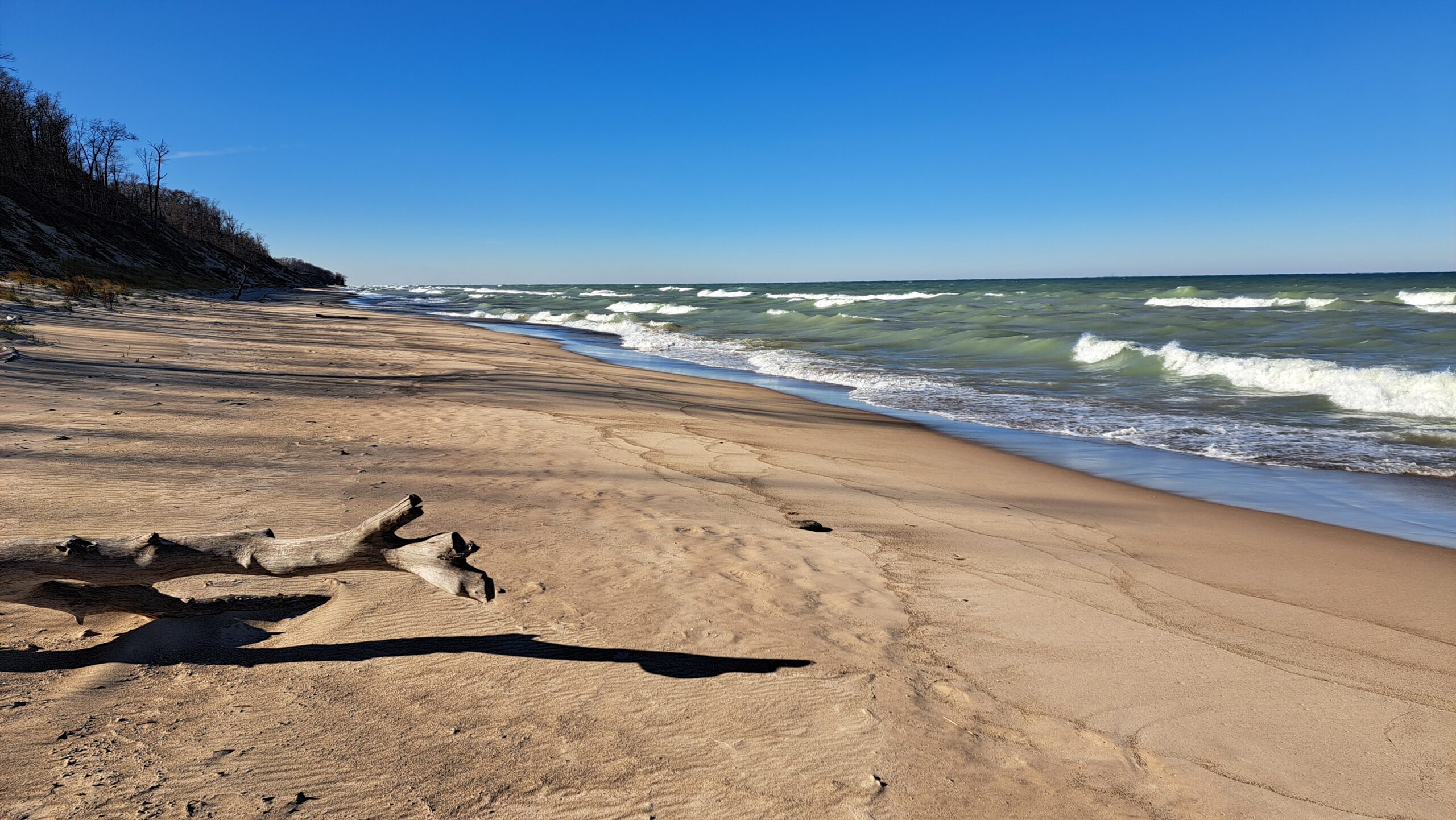
We heard the waves first, a steady percussion through the trees, like a heartbeat we were walking toward. At the crest of the dune the forest gave way to coarse grass and then the beach opened wide, pale and unbroken, stretching toward the restless surface of Lake Michigan.
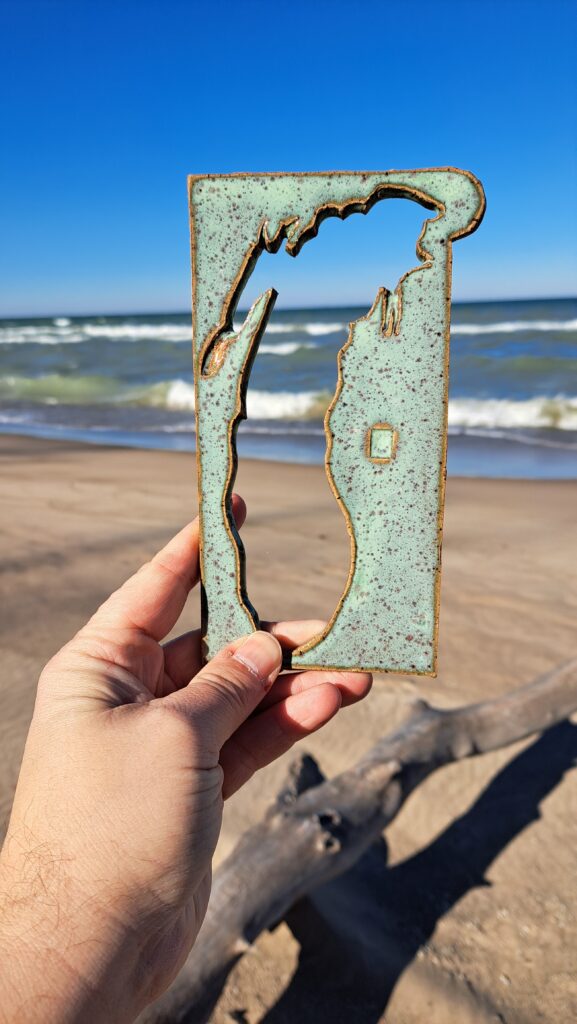
I set the box down near a weathered log and unwrapped the tiles one by one, laying them along the water’s edge for photographs. I had spent months making them — mapping the lake’s bathymetry on the computer first, printing the contour layers and cutting them into templates, then pressing those shapes into clay, carving out the depths one stratum at a time, drying them slowly so they wouldn’t warp. Each tile was a layer of the lake itself, from surface to floor, the glaze shifting from pale nearshore green to the deep blue-black of the bottom trenches. Now here they were, back at their source, the real thing stretching out behind them.
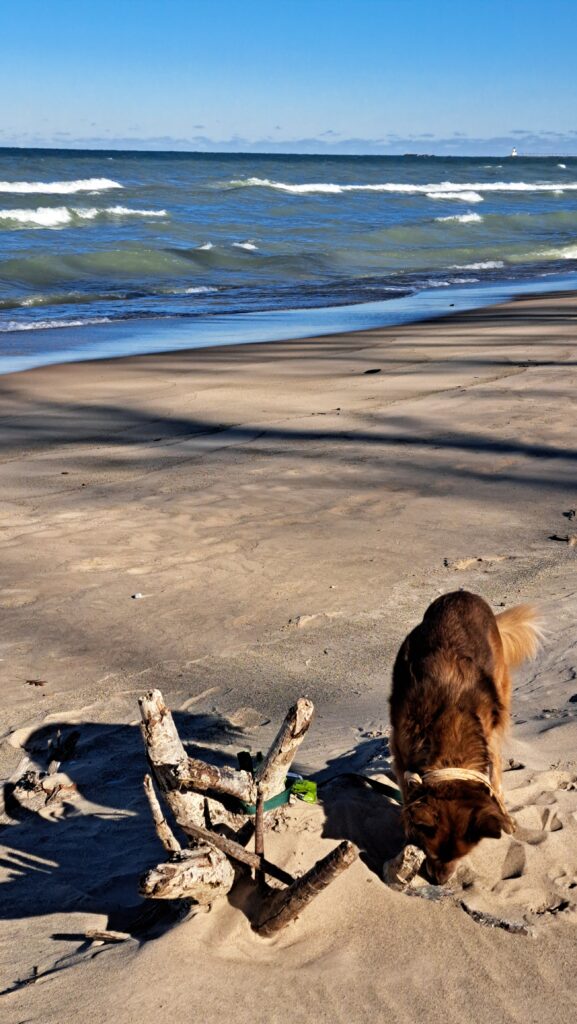
Rosie sniffed each tile carefully before turning her attention to the waterline.
I have been drawn to this lake my whole life — its vastness, the way it holds the horizon like an ocean yet feels intimate, knowable, mine. When I moved away I looked for it in other water and never found it, not even standing at the edge of the Pacific. On my thirtieth birthday I drove around it with my parents, seeing it from every side. The tiles came from that same pull — cartography, ceramics, and the lake braided together into something I could hold in my hands. I didn’t plan to bring them here. That idea came later, quietly, the way the right things usually do.
I have carried this lake in my mind for years, in other seasons, in other lives. I remember a trip with my best friend, the two of us laughing beneath a canopy of sassafras, the world tinted green beneath the leaves, as if time itself could not touch us. I remember walking through rain with a woman I loved, kissing her beneath the dripping boughs while the lake roared behind us. I remember the silence after my grandmother’s funeral, when I came here alone and stood at the water’s edge, the waves breaking and breaking against nothing.
I remember coming here as a child, carrying my little cousin on my back as we climbed the steep face of Mount Baldy, the sand sliding out beneath each step. I remember bringing my children here too, watching them run to the water’s edge, the waves still and strange that day, the water clear as glass, the pebbles underneath shining like gemstones. The horizon was veiled in haze from distant wildfires, and the lake shimmered under it, otherworldly in its beauty, as if we had stumbled into a dream.
These memories are braided into the place, carried in the sand and water. Rosie moved along the waterline, nose down, reading the beach. I had set the tiles close to the water’s edge, and as I watched, a wave came up the sand and washed around them, tugging at their edges before pulling back. Then another. The lake moving over what I had made of it, as if it recognized something of itself in the clay.
I gathered the tiles and carried them back to the log, stacking them in order — surface to floor, light to dark — and tied Rosie’s leash to a stub of branch. Then I walked back to the water alone.
I let the icy lake touch my feet, its chill pressing in, and then I leaned forward to let it wash over my hands. I cupped the water, felt it slip through my fingers. The rhythm of the waves carried me inward, the way water does — teaching me how to sit with what is, how to turn toward the quiet truths that live in me.
The lake holds what I cannot release: laughter that still echoes across decades, a kiss in the rain, the hollow silence of loss, children running toward impossible beauty. It holds the woman who broke my heart, not as she was, but as I needed her to be. It holds my grandmother’s absence and my cousin’s weight on my back, the sand giving way beneath us as we climbed.
When I turned back, Rosie was sitting beside the stacked tiles on the log, patient, watching. I wrapped each one carefully in its newspaper and tucked it back into the box. The lake had touched them now. Whatever they had been in my studio, bad maps in stone, more feeling than fact, they were something else now. I carried the box back up the trail, Rosie leading the way, and left the water behind us.
Seth Frame
Seth Frame's work has appeared in Blood+Honey and The Argyle. He grew up in South Bend, Indiana, and his creative nonfiction explores themes of place, memory, and connection. He now lives in Schenectady, New York, with his two sons.